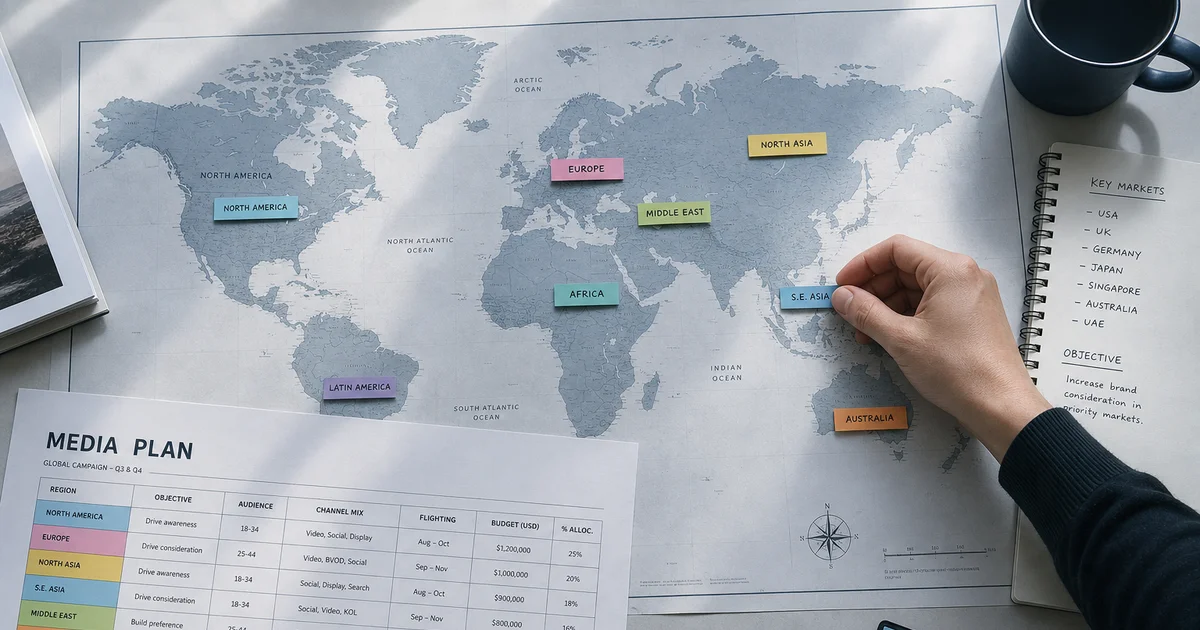


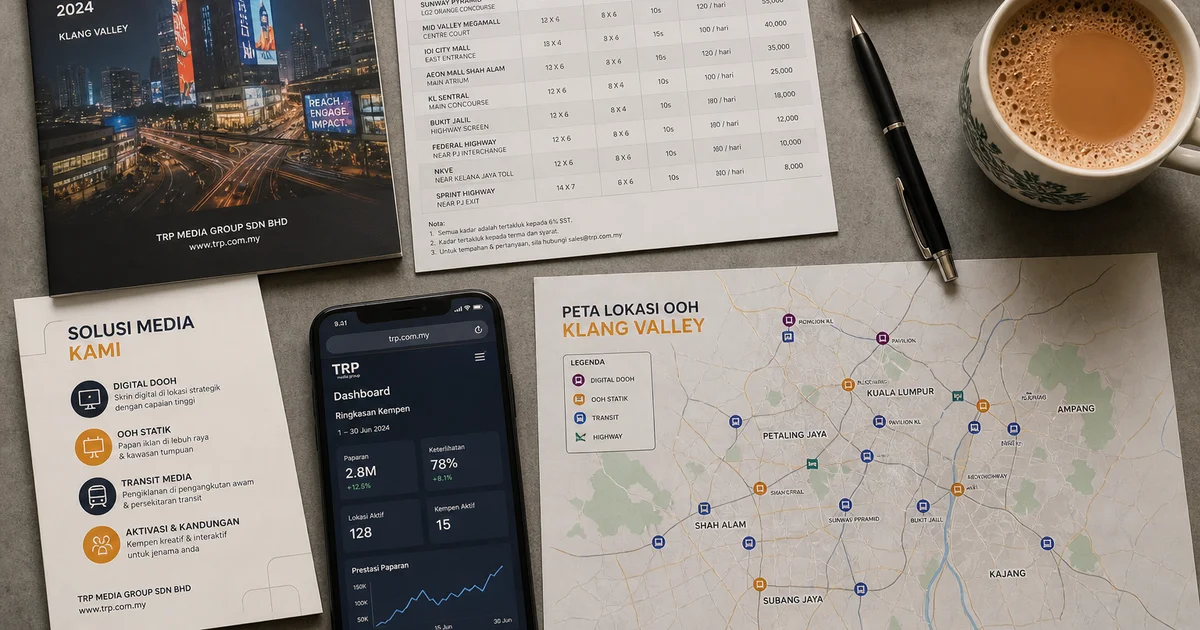


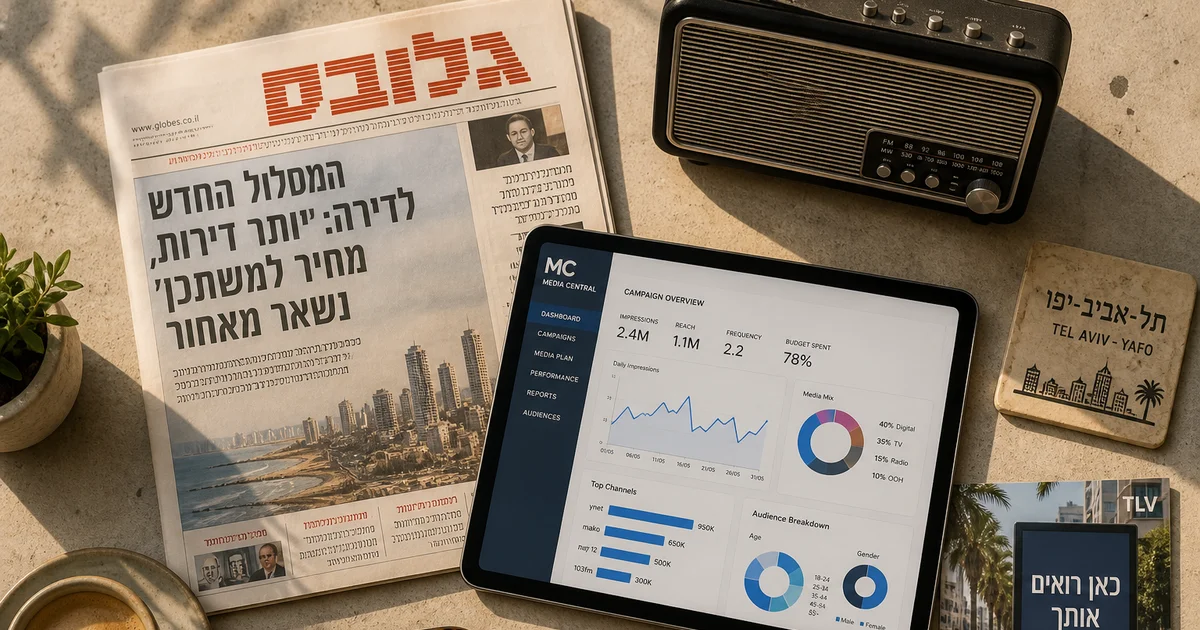
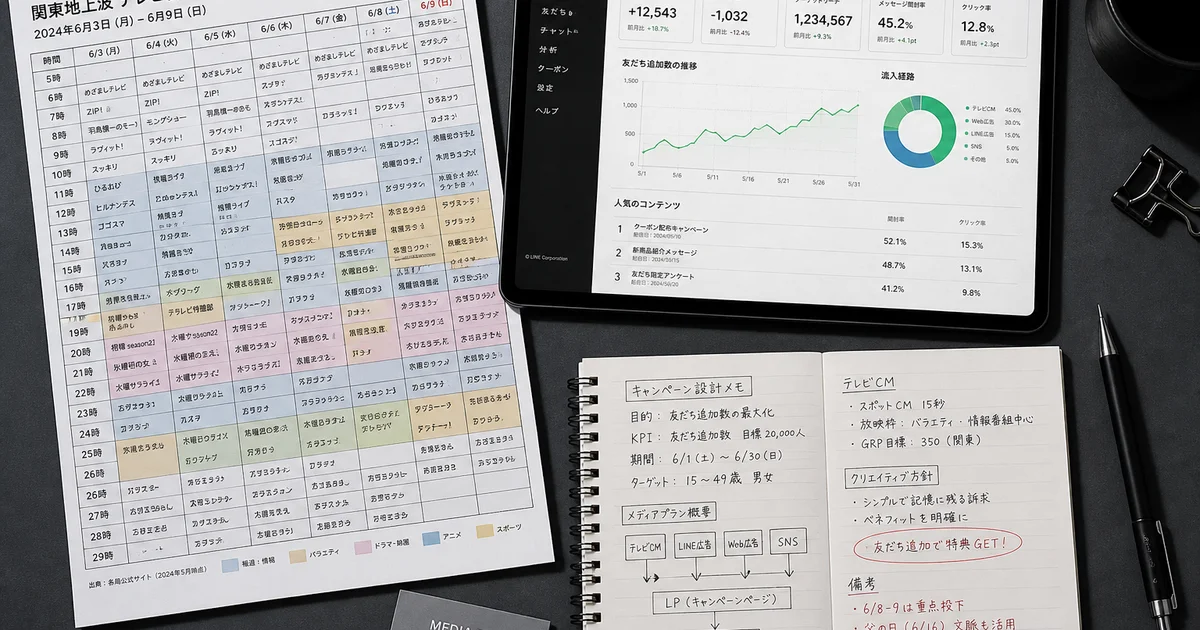
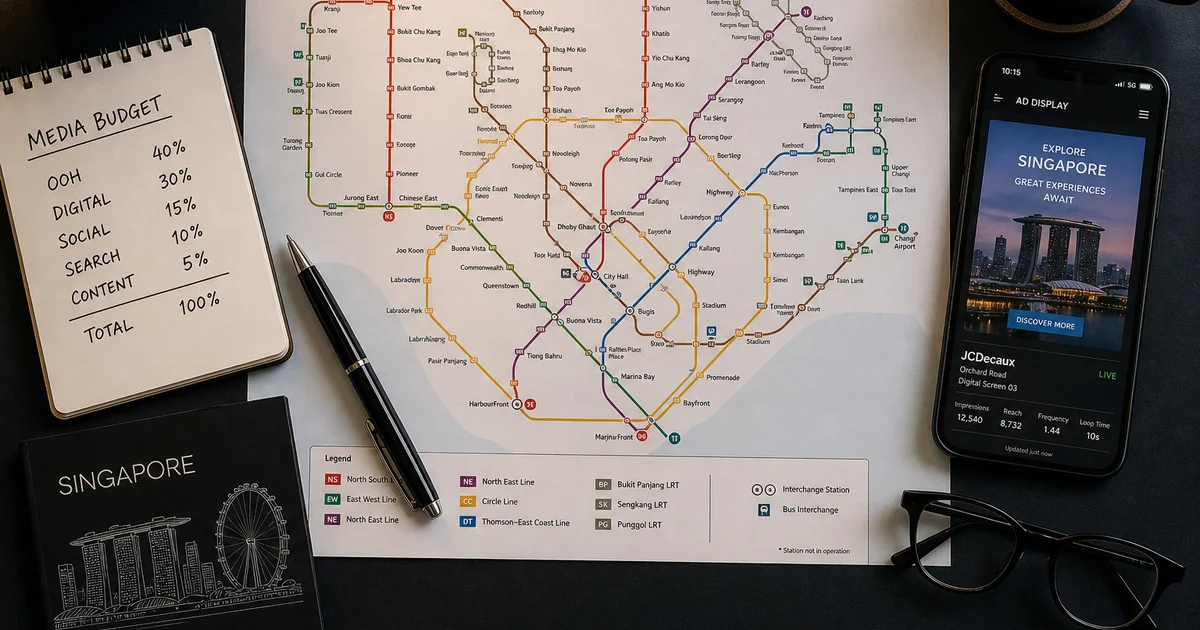


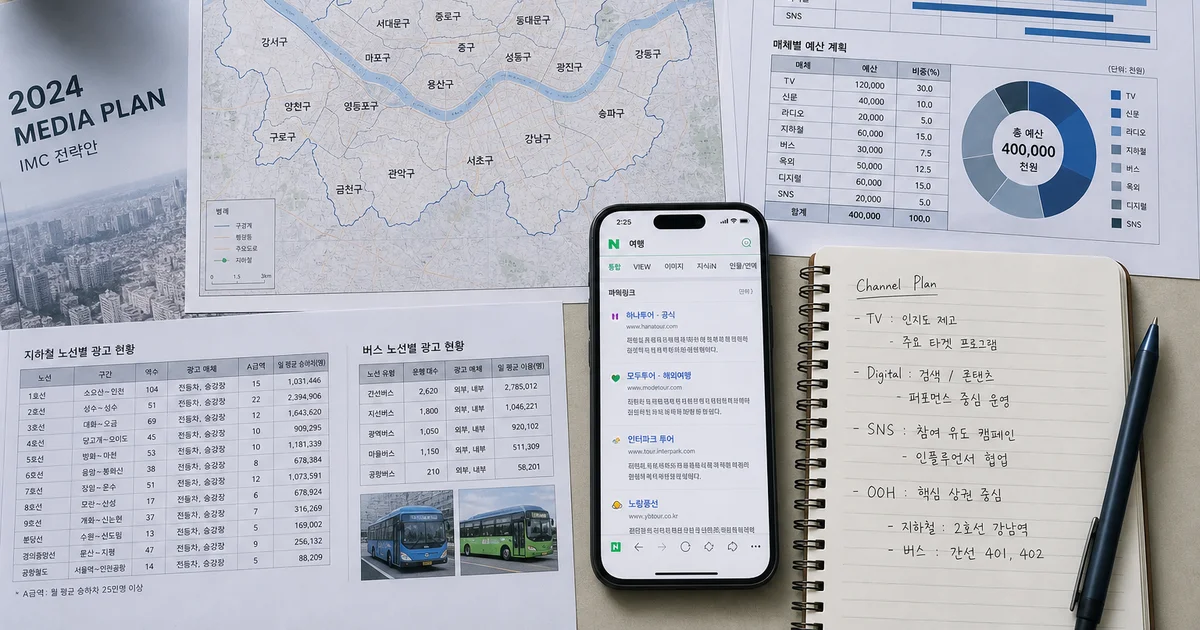
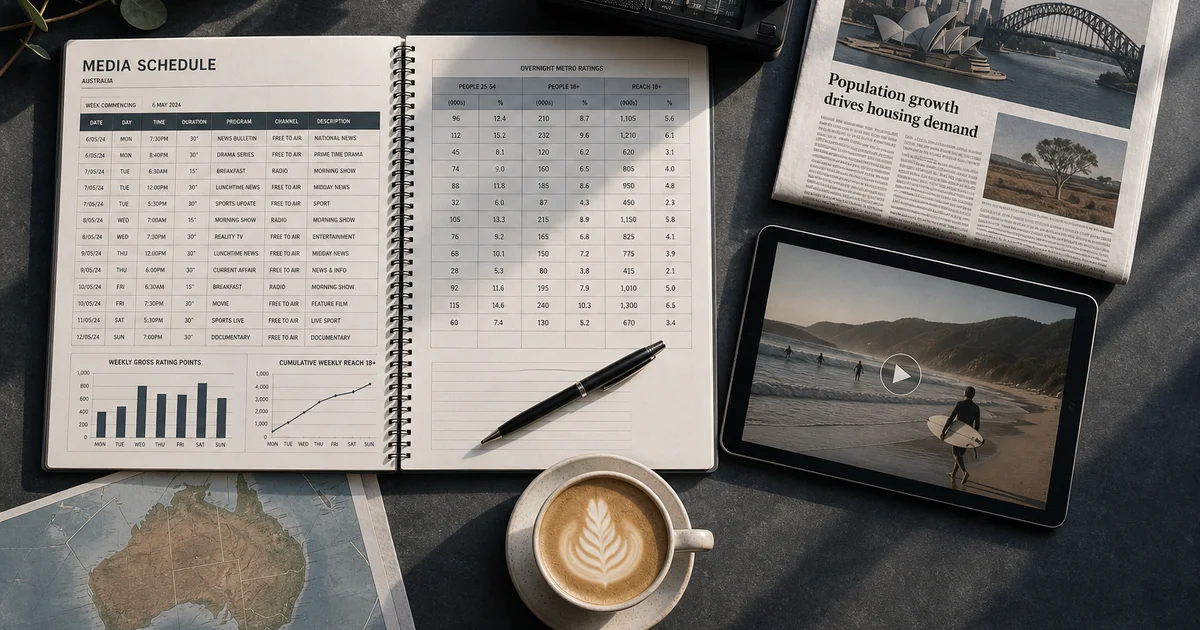
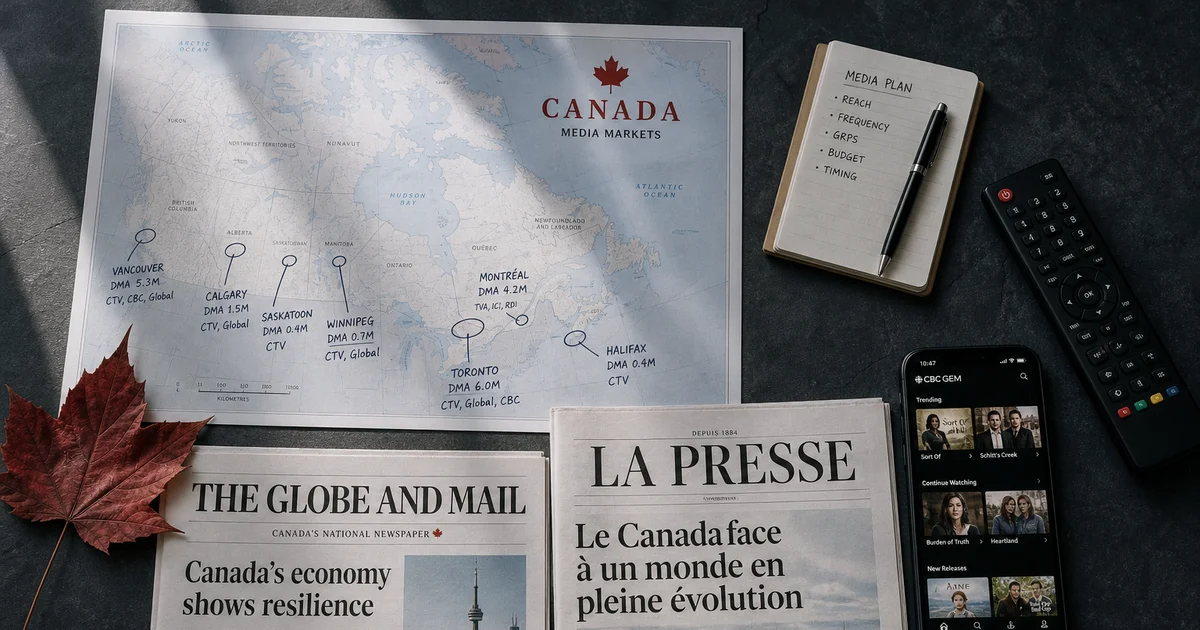

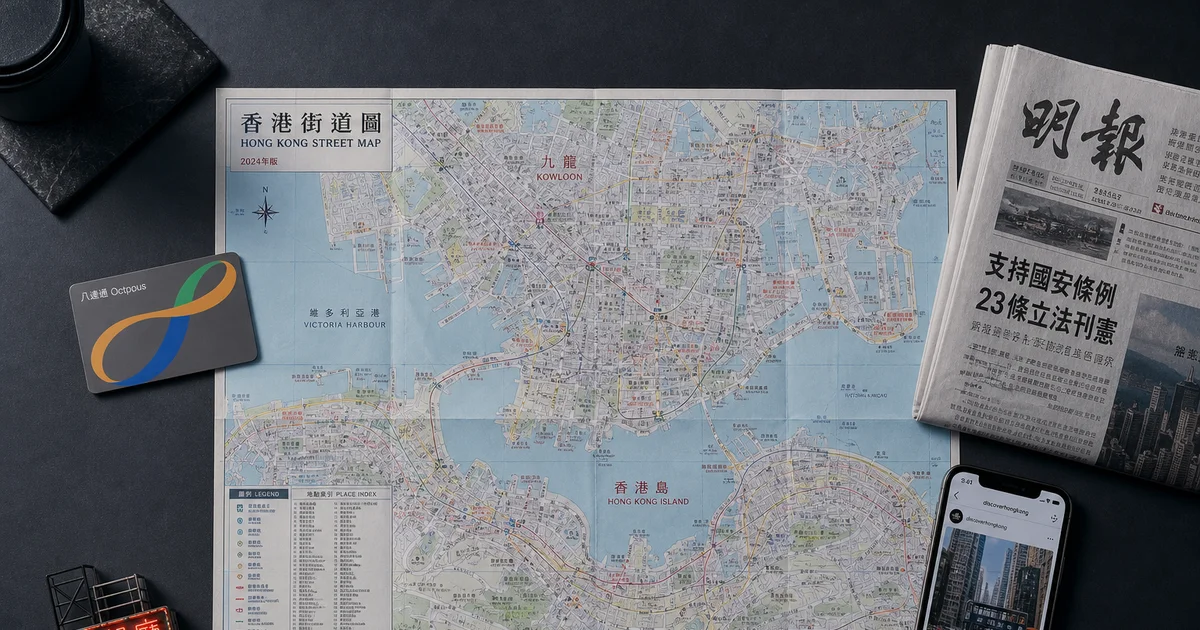
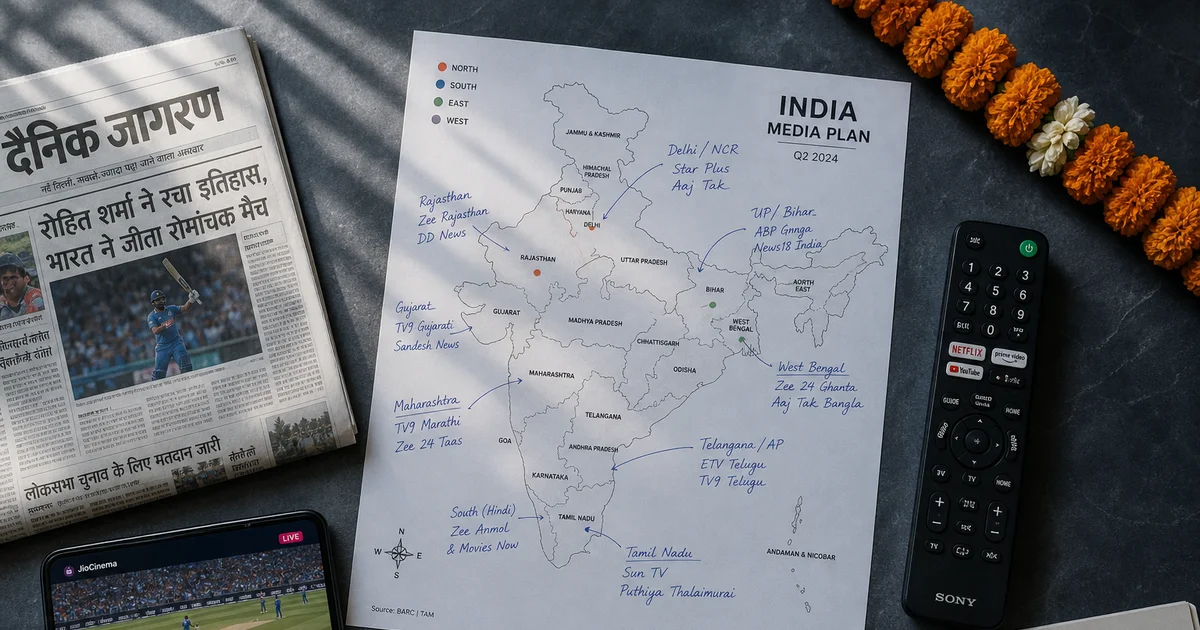
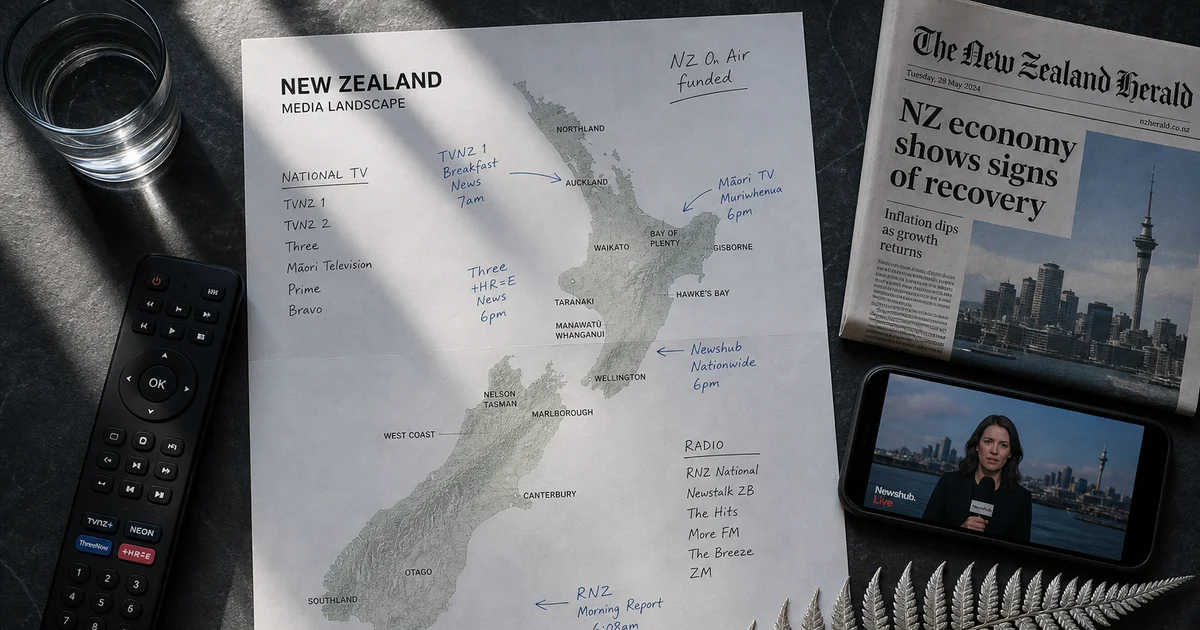
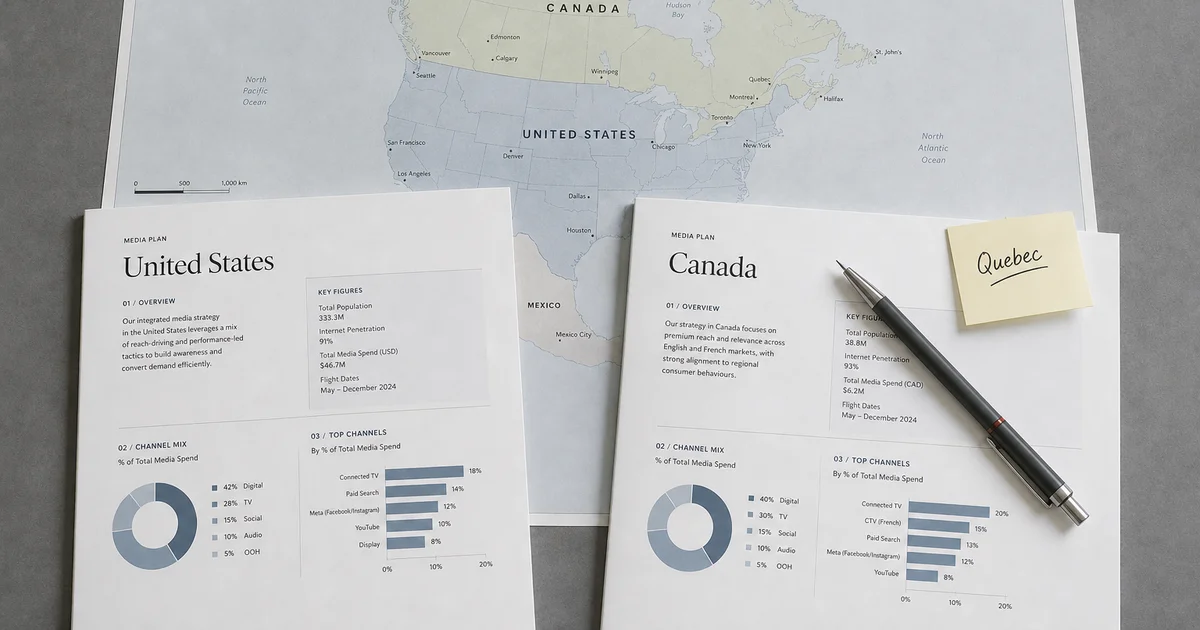










A media landscape is the combination of channels, audience measurement, trading currencies and buying structures that determines what a media budget can actually achieve in a specific market. It is not the same as a list of available media. It is the operating system behind the plan: who the audience is, how their attention is counted, and on what terms you can buy it. Every market has its own version of that operating system, and it changes at every border.
That last point matters more than most advertisers expect. The same budget, the same brief and the same agency network produce different outcomes in different countries. The difference is rarely the quality of the creative. It is almost always one of three things: where the audience actually is, how delivery is measured and in what currency, and how media is bought and on what commercial terms. An advertiser who cannot read those three dimensions cannot judge a plan, a price or an agency in that market.
The three questions that describe any market
Every country profile on this hub follows the same structure, applied medium by medium.
Position: how large is this medium in this market, and who dominates it? Television that dominates viewing in one country may be a secondary channel in the next. Digital platforms are global in name, but their relative position by market is not. What is dominant in one country is marginal elsewhere, and the local structure shapes every negotiation that follows.
Measurement: who measures it, in which currency, and what is measured versus modelled? Audience measurement is a national affair. GRP, reach, frequency distribution and other trading metrics may sound universal, but the methodology behind them varies significantly across markets. Some markets have independent measurement bodies; in others, measurement is owned or heavily influenced by one or two sellers. That distinction changes how much you can verify and how much you have to accept.
Buying: how is it traded, and what is structurally different compared to other markets? Some markets are traded on annual upfront commitments; others are largely spot. Some have transparent rate card systems; others operate through yield management and bundled discounts. Understanding the buying structure is what allows you to assess whether a price is reasonable in context. Concepts such as GRP-based trading and measured versus modelled delivery are covered in depth in the Measurement & mileage cluster.
How to use this hub
Country profiles give the full picture per market across all three dimensions: position, measurement and buying. Region profiles summarise structural patterns across neighbouring markets, which is useful when assessing a multi-market campaign or a single agency relationship covering several countries. The index below covers all markets currently profiled. If your market is not yet listed, contact Vendor-MGT directly.
Southeast Asia
Southeast Asia contains some of the fastest-growing digital markets in the world alongside television ecosystems that remain dominant in rural areas. Measurement infrastructure and the degree of standardisation in buying terms vary sharply by country. The regional overview explains what holds across the region; individual country profiles go deeper.
- Media landscape: Thailand
- Media landscape: Vietnam
- Media landscape: Indonesia
- Media landscape: Malaysia
- Media landscape: Philippines
- Media landscape: Singapore
East Asia
China, Japan, South Korea, Hong Kong and Taiwan each have distinct platform ecosystems and trading structures, with measurement systems that differ substantially from international norms. Digital and broadcast overlap in ways that require local knowledge to read correctly. The East Asia overview maps regional patterns; country profiles are linked below.
- Media landscape: Japan
- Media landscape: South Korea
- Media landscape: China
- Media landscape: Hong Kong
- Media landscape: Taiwan
Oceania
Australia and New Zealand share a language and some agency relationships with the United Kingdom and the United States, but their buying structures and measurement currencies are distinct. Broadcasters hold significant market power in both countries, and trading terms reflect that. The Oceania overview covers regional patterns.
South Asia
India has one of the largest and most complex broadcast markets in the world, with measurement systems that cover major cities reliably and rural areas less so. Pakistan and Bangladesh add further variation in channel access, digital penetration and buying structure. Country profiles give the detail.
- Media landscape: India
- Media landscape: Pakistan
- Media landscape: Bangladesh
North America
The United States and Canada share a border and many agency relationships, but operate distinct trading systems with different measurement bodies and buying currencies. The North America overview identifies what travels across the border and what does not.
Latin America
Latin America spans markets as different as Brazil, which operates largely in Portuguese with its own dominant broadcaster, and smaller Spanish-language markets with much thinner measurement infrastructure. The Latin America overview maps what holds across the region.
- Media landscape: Brazil
- Media landscape: Mexico
- Media landscape: Argentina
- Media landscape: Colombia
- Media landscape: Chile
- Media landscape: Peru
- Media landscape: Ecuador
Western Europe
The United Kingdom, Germany and France anchor Western Europe’s media markets, but the Benelux, Iberian and Alpine markets each operate under distinct buying structures and measurement regimes. The Europe overview summarises cross-regional patterns; individual country profiles are below.
- Media landscape: United Kingdom
- Media landscape: Germany
- Media landscape: France
- Media landscape: Netherlands
- Media landscape: Belgium
- Media landscape: Benelux
- Media landscape: Spain
- Media landscape: Portugal
- Media landscape: Iberia
- Media landscape: Italy
- Media landscape: Ireland
DACH
Germany, Austria and Switzerland are often grouped for planning purposes, but their broadcast landscapes, regulatory frameworks and buying currencies are not identical. The DACH overview explains where alignment is real and where it is assumed; the Germany profile is listed under Western Europe.
- Media landscape: Switzerland
- Media landscape: Austria
Scandinavia and the Nordics
Scandinavia combines high digital penetration with mature, independent measurement systems and relatively transparent trading. Finland sits alongside the region with a distinct language and media market structure. The Scandinavia overview maps shared patterns.
- Media landscape: Sweden
- Media landscape: Denmark
- Media landscape: Norway
- Media landscape: Finland
Central Europe
Poland, Czech Republic, Hungary, Romania, Slovakia, Slovenia, Croatia, Bulgaria and Greece form a varied group. Television remains strong across most of these markets, digital growth is rapid, and measurement infrastructure varies considerably by country. The Central Europe overview identifies shared structural features.
- Media landscape: Poland
- Media landscape: Czech Republic
- Media landscape: Hungary
- Media landscape: Romania
- Media landscape: Slovakia
- Media landscape: Slovenia
- Media landscape: Croatia
- Media landscape: Bulgaria
- Media landscape: Greece
The Baltics
Estonia, Latvia and Lithuania are small markets with distinct languages and media structures, despite geographic proximity. Digital penetration is high; broadcast markets are thin. The Baltics overview covers what they share and where they diverge.
- Media landscape: Estonia
- Media landscape: Latvia
- Media landscape: Lithuania
Eastern Europe and the balkans
Russia, Ukraine, Serbia and Cyprus each operate media markets with distinct regulatory contexts, ownership structures and trading terms. Country profiles cover these individually; they are not currently grouped under a regional overview.
- Media landscape: Russia
- Media landscape: Ukraine
- Media landscape: Serbia
- Media landscape: Cyprus
The gulf and middle east
The Gulf Cooperation Council markets share a common language and some cross-border media, but buying structures and channel dominance vary between the UAE, Saudi Arabia, Qatar and Kuwait. The Gulf region overview maps shared and diverging patterns, and the Middle East overview extends the frame to include Egypt, Morocco and Turkey.
- Media landscape: United Arab Emirates
- Media landscape: Saudi Arabia
- Media landscape: Qatar
- Media landscape: Kuwait
- Media landscape: Egypt
- Media landscape: Morocco
- Media landscape: Turkey
Israel
Israel is a small but sophisticated media market with strong digital adoption, independent measurement infrastructure and a concentrated broadcast sector. Its buying dynamics are distinct from neighbouring markets and warrant a separate profile. Read the Israel media landscape overview.
Africa
South Africa, Nigeria and Kenya are the sub-Saharan markets currently profiled. Television reaches mass audiences across all three, but measurement depth and buying formality vary considerably between them. Country profiles give the full picture.
- Media landscape: South Africa
- Media landscape: Nigeria
- Media landscape: Kenya
Assessing a plan in an unfamiliar market
A media plan does not travel. To assess one in a market you are not familiar with, you need a yardstick agreed in advance, denominated in the local trading currency, and calibrated against local benchmarks. Trust is good. Verifying is better, and it is better for both sides. Vendor-MGT supports advertisers across all the media landscapes profiled here, independently and without commercial relationships with any agency or media owner. If you are entering a new market or reviewing an existing agency relationship, the right starting point is media agency selection or a media audit.
Frequently asked questions
What is a media landscape? A media landscape is the combination of channels, audience measurement, trading currencies and buying structures that determines what a media budget can actually achieve in a specific market. It covers not just which media exist, but how audiences are counted, how inventory is priced, and on what commercial terms it is bought. Every market operates its own version of this system.
Why do media landscapes differ so much by country? Measurement systems, trading currencies and buying structures are national, not global. They were built market by market, often around dominant local broadcasters or publisher groups, and they reflect local regulatory frameworks, language barriers and audience behaviour. Digital platforms are global in reach, but their relative position within each national media mix is not uniform. A channel that commands the majority of a market’s viewing in one country may be a secondary platform in the next.
Why does this matter for my media budget? A media plan can only be judged against the local currency and local benchmarks. Without knowing what a rating point costs in a specific market, what measurement methodology underpins the figures, and how buying is structured, it is impossible to assess whether a plan is efficient or a price is competitive. The same budget, the same brief and the same agency can produce very different outcomes depending on how well the plan is calibrated to local conditions.
How are the country profiles structured? Every country profile follows the same three-part framework: position (how large is this medium in this market, and who dominates it), measurement (who measures it, in which currency, and what is measured versus modelled), and buying (how it is traded, and what is structurally different compared to other markets). This consistent structure allows you to read any market the same way, and to compare across markets on the same terms.