 Malaysia
In this article
- Market shape at a glance
- Television: two camps, two measurement systems
- Digital, social and influencer media
- Out-of-home
- Radio and audio
- Print and magazines
- Regulation and category restrictions
- What to look for when assessing a plan in Malaysia
- Selecting and managing a media agency in Malaysia
- The yardstick, agreed in advance
- Frequently asked questions
Advertising in Malaysia means operating in a highly connected, multilingual market where television is organised around two distinct commercial camps with two parallel measurement systems, where digital reach is dominated by global platforms, and where clear category rules, shaped by Malaysia’s regulatory and cultural framework, apply across every medium. The industry is actively building a unified cross-media measurement framework. Understanding how each channel is bought, measured and regulated is the starting point for any serious plan here.
Market shape at a glance
| Situation | Relevant channel or consideration |
|---|---|
| Mass reach across the Peninsula | Television, through the two commercial camps |
| Mobile-first, high-penetration audiences | Digital and social, global platforms dominate |
| Urban high-traffic environments | Out-of-home, concentrated in the Klang Valley |
| Language-specific audience segments | Separate Malay, English, Chinese and Tamil ecosystems |
| Restricted categories (alcohol, tobacco, health) | Regulatory review required before any plan is finalised |
| East Malaysia coverage | Requires explicit planning; a Peninsula plan under-delivers there |
Malaysia’s internet penetration stood at 98 percent of the population in early 2026 (DataReportal, 2026), making it one of the most connected markets in Southeast Asia. Digital spend is substantial, with the large majority flowing to global platforms. Television remains central for mass reach. Out-of-home is concentrated in the Klang Valley and fragmented across operators.
Running across all of this: four language-based media ecosystems, Malay, English, Chinese and Tamil, that operate side by side with sharply different reach and pricing. Language planning is a first-order decision in this market, not an afterthought.
One further structural note: monitored adex in Malaysia is compiled at published rate-card values, as is standard in most markets. Net investment is lower. Gross monitored figures and net budget figures must never be mixed in any planning or evaluation exercise.
Television: two camps, two measurement systems
Television in Malaysia operates through two commercial camps, Media Prima, the free-to-air group, and Astro, the pay-TV group, alongside public broadcaster RTM. Each camp sells its own inventory. There is no shared national sales house.
Two audience measurement systems operate in parallel: the Nielsen television panel that agencies have historically used, and the Kantar measurement that Astro commissions for its platforms. They are not reconciled. Which measurement a plan is reported against must be agreed explicitly before a brief goes out.
Digital, social and influencer media
Malaysia is a mobile-first market where TikTok, YouTube, Facebook, Instagram and WhatsApp each reach large shares of the population. Unlike some neighbouring markets, there is no dominant local platform to account for separately. That makes this landscape broadly comparable with other markets across Southeast Asia, while remaining distinct in its language segmentation and regulatory context.
Retail media on Shopee, Lazada and TikTok Shop is growing quickly and sits largely outside standard monitored reporting. The Malaysian Digital Association maintains a digital audience currency operated by Comscore, which measures audiences rather than spend, and a significant share of real digital investment remains invisible in monitored figures.
Out-of-home
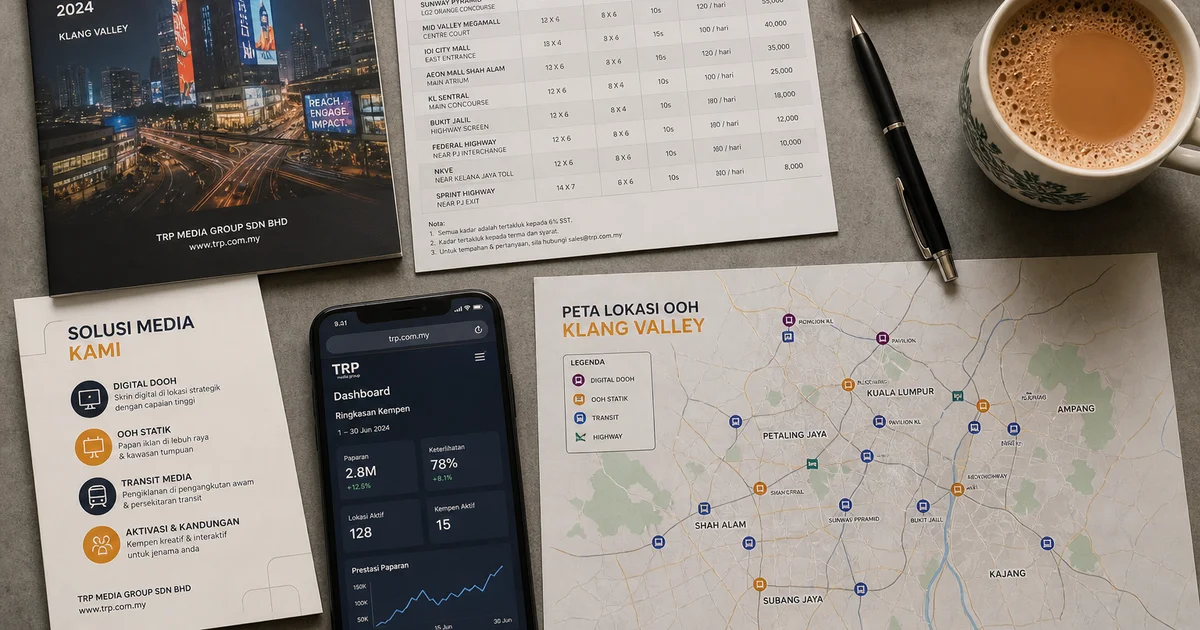
Out-of-home inventory in Malaysia is concentrated in the Klang Valley and fragmented across multiple operators, including Big Tree, Seni Jaya and Spectrum Outdoor, with transit inventory held under separate concessions. There is no industry-wide audience currency; delivery claims are operator-based, though third-party digital OOH verification services are available.
Permits run through local authorities, in Kuala Lumpur, through the city hall DBKL, and national-language requirements apply: Bahasa Malaysia must appear correctly and prominently in outdoor advertising.
Radio and audio
Commercial radio in Malaysia operates on a single ratings currency measured by GfK, appointed by the commercial radio operators. That makes radio one of the more straightforwardly measured channels in this market. Stations are broadly segmented by language, which reinforces the importance of language planning when radio is part of a broader schedule.
Print and magazines
Print reflects Malaysia’s language segmentation directly, with distinct newspaper and magazine titles serving Malay, English, Chinese and Tamil readerships. Circulation and readership figures vary in methodology across publishers and should be assessed critically. Print remains relevant for certain audience segments and categories, though digital has reshaped its role in most schedules.
Regulation and category restrictions
Malaysia’s advertising regulatory framework is clear and actively enforced. Consider the main restrictions before any plan is finalised.
Alcohol advertising is prohibited in broadcast and networked media, including online, under the industry Content Code. Limited event-sponsorship carve-outs exist, but the long-established requirement that alcohol communication must not be directed at Muslims applies throughout. In practice, mass-media options for alcohol are very limited.
Tobacco and vape advertising, promotion and sponsorship are fully prohibited under the Control of Smoking Products for Public Health Act 2024, which has been in force since October 2024. Any nicotine-adjacent category should assume no paid media is available.
Advertisements for medicines and health products require prior approval from the Medicine Advertisements Board. The KKLIU approval number must be displayed in the advertisement itself.
Broadcast and online content standards follow the industry Content Code administered by the Content Forum; general advertising follows the self-regulatory code of the Advertising Standards Authority Malaysia. Creative and placement observe Islamic values and Malaysia’s multicultural context, including care during Ramadan. Experienced local partners navigate this routinely. Free-to-air television has historically applied local-production requirements to commercials; current practice should be confirmed with broadcasters or the Content Forum before committing foreign-produced copy. This article is informational in nature and does not replace legal verification with qualified local counsel before material runs.
What to look for when assessing a plan in Malaysia
When a media plan lands on your desk, these are the questions that determine whether it holds up:
- Television measurement: Which system, Nielsen or Kantar, is the reporting based on, and is that named in the contract?
- Digital transparency: Which figures are platform self-reported? Is in-app spend and retail media spend visible anywhere in the reporting?
- Language and geography: Does the plan address the four language-segmented ecosystems deliberately, and does it cover East Malaysia or only the Peninsula?
- Category compliance: For restricted categories, who verifies compliance before material runs, and when in the process?
- Rate card versus net: What is the gap between rate card and net in this plan, and who keeps the difference?
- Cross-channel totals: Are definitions fixed before anything is added up? Measured versus modelled must be distinguished here as in any market.
The same discipline applies whether you are evaluating a new agency’s recommendation or auditing an existing plan. If you would like an independent view, Vendor-MGT’s audit and vendor management practice supports advertisers operating in Malaysia and across the region.
Selecting and managing a media agency in Malaysia
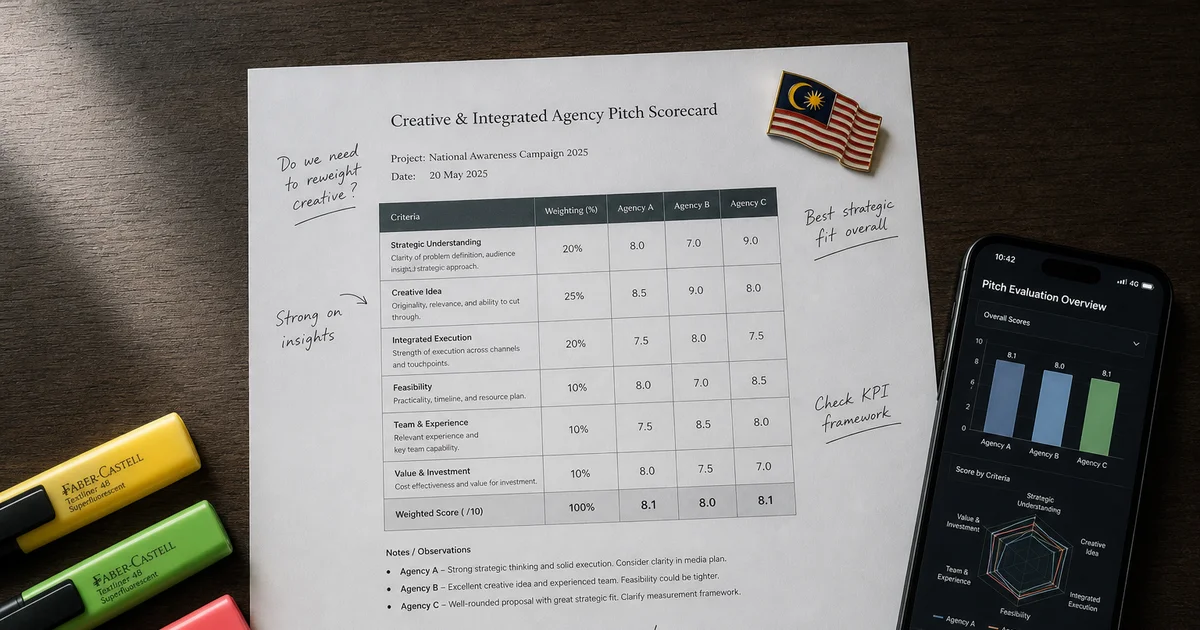
Choosing the right agency partner is a separate exercise from understanding the media landscape. In a market with this level of structural complexity, the selection process matters. Which agencies genuinely cover the language ecosystems you need? How do they report across the two television measurement systems? What is their practice on transparency? How to select and manage a media agency in Malaysia provides an advertiser’s framework for the pitch and the ongoing relationship.
The yardstick, agreed in advance
Advertising in Malaysia rewards preparation. The market is sophisticated, the regulatory framework is clear, and the measurement landscape is in active development. The Single Audience Measurement initiative launched in 2026 is the industry’s own recognition that a unified cross-media framework is needed. Until that framework is in place, every plan should name its measurement currency explicitly, in the medium and the metric the plan actually uses.
Gross rate-card figures and net investment figures belong in separate columns. Trust is good; verifying is better. Vendor-MGT works exclusively for advertisers, not for agencies or media owners, and supports clients in assessing, negotiating and monitoring media investments in Malaysia and across the region. If you are planning a review of your Malaysian media activity, contact us to discuss how we can help.
Frequently asked questions
Who measures TV audiences in Malaysia? Two systems operate in parallel. Agencies have historically used the Nielsen television panel; Astro commissions separate measurement from Kantar for its platforms. The two are not reconciled. Commercial radio operates on a single GfK currency. The industry launched a Single Audience Measurement initiative in 2026 to develop one cross-media framework; no provider had been appointed as of late 2026. Every plan should name its measurement currency explicitly.
What are the biggest advertising platforms in Malaysia? Global platforms, TikTok, YouTube, Facebook, Instagram and WhatsApp, dominate digital reach in a market with 98 percent internet penetration. Television, organised through the Media Prima free-to-air camp and the Astro pay-TV camp, remains the primary mass-reach medium. Language segmentation means that Malay, English, Chinese and Tamil ecosystems each have their own relevant titles and channels, with sharply different reach and pricing.
Can you advertise alcohol or tobacco in Malaysia? Alcohol advertising is prohibited in broadcast and networked media, including online, under the industry Content Code, with limited event-sponsorship carve-outs; the requirement that alcohol communication must not be directed at Muslims applies throughout, making mass-media options very limited in practice. Tobacco and vape advertising, promotion and sponsorship are fully prohibited under the Control of Smoking Products for Public Health Act 2024, in force since October 2024. Any nicotine-adjacent category should assume no paid media is available.
What approval do health product advertisements need in Malaysia? Advertisements for medicines and health products require prior approval from the Medicine Advertisements Board before running. The KKLIU approval number must be displayed in the advertisement itself. Advertisers in any health or wellness-adjacent category should build pre-approval time into their production and media schedules, and confirm current requirements with qualified local counsel.
Is digital ad spend in Malaysia fully measured? No. The Malaysian Digital Association maintains a digital audience measurement currency operated by Comscore, which measures audiences rather than spend. Digital adex estimates vary by source and are not reconciled across them. In-app environments and retail media platforms such as Shopee, Lazada and TikTok Shop sit largely outside monitored figures, meaning a significant share of real digital investment is invisible in published adex data. Plans should distinguish clearly between what is measured, what is modelled and what is not captured at all.