 India
In this article
- Where to start: which channel or question is yours
- Television
- TV audience measurement
- Digital and streaming
- Radio and audio
- Out-of-home
- Regulation and category rules
- Buying structure and transparency
- Assessing a media plan for India
- Finding and managing a media agency in India
- Frequently asked questions
Advertising in India means working with one of the world’s most structurally complex media markets. A dominant broadcaster born from the largest merger in the market’s history. A television currency frozen by the government pending reform. A print sector still unusually large by global standards, yet bought without a current audience currency. And a media-buying industry under active competition investigation. Understanding the structure before committing budget is not optional.
India had 1.03 billion internet users at the end of 2025, equal to 70.0 percent of the population (DataReportal, Digital 2026 India). Digital channels take roughly two thirds of ad spend, yet television and print remain consequential in ways that distinguish India from comparable markets. The standard market reports are WPP Media’s This Year Next Year India, the Pitch Madison Advertising Report and the dentsu-e4m digital report. Their totals differ by definition, so any aggregate figure needs its source named before it enters a plan.
Where to start: which channel or question is yours
| Your priority | Where to go on this page |
|---|---|
| Television reach and measurement | Television / TV measurement |
| Digital, streaming and retail media | Digital and streaming |
| Print and regional press | |
| Radio and audio | Radio and audio |
| Out-of-home | Out-of-home |
| Category rules and legal compliance | Regulation |
| Buying transparency and rebates | Buying structure |
| Evaluating a media plan | Assessing a plan |
| Selecting or managing a local agency | Media agency |
Television
JioStar, created when the Reliance and Disney joint venture completed in November 2024, combines the Star and Viacom18 channel portfolios and is the dominant commercial broadcaster. Its JioHotstar streaming service launched in February 2025. Zee Entertainment stands alone after the Sony merger was terminated in January 2024. Sony Pictures Networks India and Sun TV, which is strong in the south, are the other major groups. Doordarshan is the public broadcaster, and DD Free Dish is the largest free DTH platform. TRAI’s tariff orders regulate channel pricing and carriage.
The IPL is the single biggest advertising property in the market. JioStar holds both the television and streaming rights through 2027 and reported more than a billion viewers across TV and digital for the 2025 season (company figures).
TV audience measurement
BARC India is the sole television currency, jointly governed by broadcasters, advertisers and agencies, with a panel of more than 70,000 metered homes. Its history matters to any buyer. In October 2020, news-channel ratings were suspended after alleged panel manipulation came to light, resuming in March 2022 with four-week rolling averages. Landing-page placement distorting ratings has been a documented issue and is explicitly excluded under the new policy. In 2026, the government replaced the 2014 ratings guidelines with the Television Ratings Policy 2026, mandating a larger panel (80,000 homes rising to 120,000), technology-neutral measurement across cable, DTH and connected TV, independent governance and audits, and easier entry for new rating agencies. Pending BARC’s re-registration under the new policy, the ministry froze publication of all ratings from July 2026. At the time of writing the freeze had not been lifted, leaving buyers to trade on historical data. Any media plan must state which ratings window it relies on.
Digital and streaming
YouTube and Meta’s platforms dominate reach. WhatsApp is near-universal among Indian smartphone users. JioHotstar claims the world’s largest streaming event audiences, though that characterisation is its own. Quick-commerce and e-commerce retail media, including Blinkit, Zepto, Flipkart and Amazon, is a fast-growing spend line now included in standard adex definitions. Since 20 February 2026, IT rules require prominent labels and provenance metadata on synthetically generated content, with verification duties for large platforms. This extends to AI-generated advertising creative. Reporting is largely platform-reported, and the distinction between platform-reported, third-party-measured and modelled figures must be established per platform before the plan is approved.
Competition context: the Competition Commission of India fined Meta in 2024 over WhatsApp data sharing for advertising. On appeal in November 2025 the penalty was upheld while the five-year data-sharing ban was set aside with conditions. The matter is before the Supreme Court.
India’s print market remains large by global standards. Major groups include Dainik Jagran, Dainik Bhaskar, the Times of India group and Hindustan Times, alongside strong regional-language titles. The audit point that matters: the last full Indian Readership Survey dates to 2019 and none has been published since. Print in India is therefore bought without a current audience currency. Planners rely on dated IRS data, circulation figures and proprietary research. Any print audience claim must carry a stated source and date.
Radio and audio
Private FM in India operates under government licensing and still may not broadcast its own news. Only All India Radio bulletins may be carried in unaltered form. Major networks include Radio Mirchi, Big FM and Red FM. Audio streaming is growing alongside FM, but measurement across both is fragmented. There is no established currency equivalent to television’s BARC panel, and that makes audience verification a consistent planning challenge.
Out-of-home
Digital out-of-home is expanding rapidly across Indian cities, but measurement remains limited and proprietary, with no established industry currency. Delivery claims are operator-reported, and verifying actual impressions and dwell time is difficult without third-party measurement. Neighbouring markets covered in this series, such as advertising in Southeast Asia and advertising in China, face the same absence of an independent OOH currency.
Regulation and category rules
India’s advertising regulatory framework combines self-regulation through ASCI, statutory consumer protection through the CCPA under the Consumer Protection Act 2019, and broadcast regulation through the information and broadcasting ministry via the Cable Television Networks Rules.
Alcohol advertising is prohibited on television. That prohibition produced the market’s well-documented surrogate advertising practice, using brand extensions such as music, soda and events. The CCPA’s 2022 guidelines prohibit surrogates, and dedicated surrogate-advertising guidelines remain in draft. Tobacco advertising is banned, with pan masala surrogates under scrutiny.
Real-money gaming: the Promotion and Regulation of Online Gaming Act 2025 prohibits online money games and their advertising. It came into force on 1 May 2026, with constitutional challenges pending before the Supreme Court without a stay. Advertising such games, including by influencers, is prohibited.
Pharma: the Drugs and Magic Remedies (Objectionable Advertisements) Act restricts drug and remedy advertising. Crypto: ASCI guidelines require a disclaimer that virtual digital assets are unregulated and can be highly risky. Influencer disclosure: ASCI guidelines require disclosure of material connections, and the Department of Consumer Affairs’ 2023 endorsement guidelines carry penalties of up to ten lakh rupees for a first offence and fifty lakh for subsequent ones, with additional qualification rules for health and finance influencers.
Privacy: the Digital Personal Data Protection Act 2023 became operational when its rules were notified in November 2025, with obligations phasing in through 2026 and 2027. These include verifiable parental consent and restrictions on tracking and targeted advertising directed at children, and penalties up to 250 crore rupees per breach. Treat compliance obligations as imminent rather than fully settled.
This article provides orientation, not legal advice. Rules change, and local legal verification is required before any campaign goes live.
Buying structure and transparency
India’s media-buying market has long operated on volume deals and rebates. That opacity is now under formal scrutiny. The Competition Commission of India has been investigating alleged cartelisation among major buying agencies since raids in March 2025, with dentsu India a self-declared leniency applicant. No findings have been issued. This context is the reason contracts in this market need explicit rebate, disclosure and audit provisions, and those provisions need to be agreed before buying begins, not after.
Assessing a media plan for India
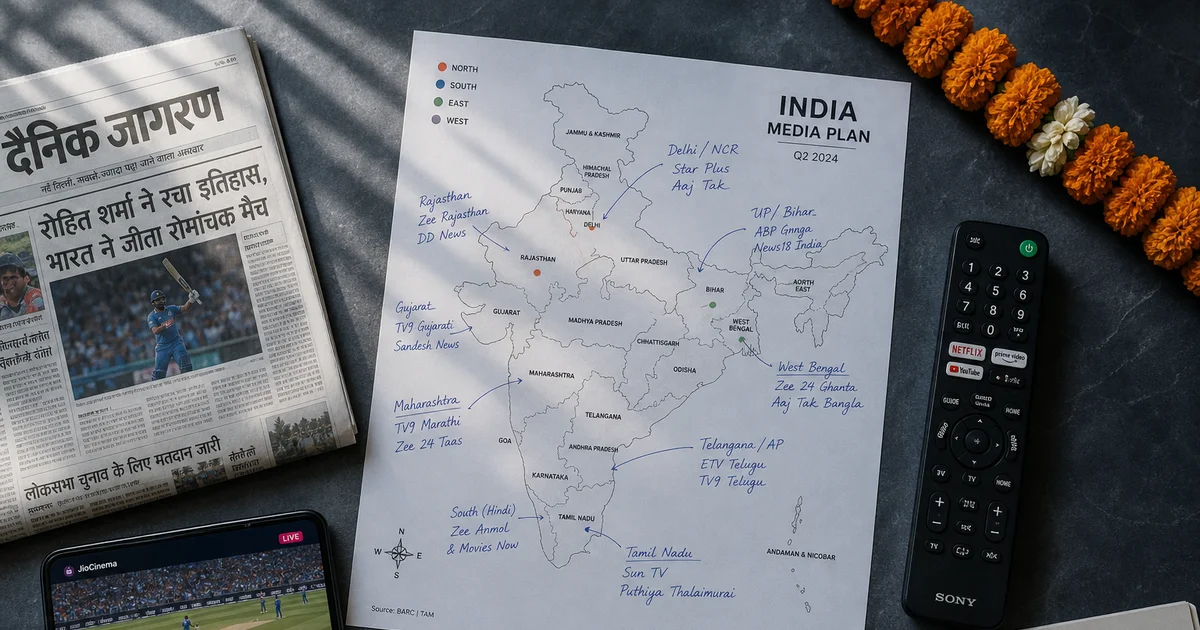
A plan submitted for India should be able to answer the following questions. Which BARC ratings window does each TV claim rely on, given the 2026 ratings freeze and the earlier alleged manipulation history? How are landing-page distortion and connected-TV viewing treated in the data? What source and date support any print claim, given there is no current readership currency? Are digital figures platform-reported, third-party-measured or modelled? How is retail media reported and attributed? Are rebates and volume deals disclosed and auditable? And are category rules, from the online gaming advertising ban to surrogate rules and the phasing DPDP obligations, cleared for the plan’s specific campaign dates?
Finding and managing a media agency in India
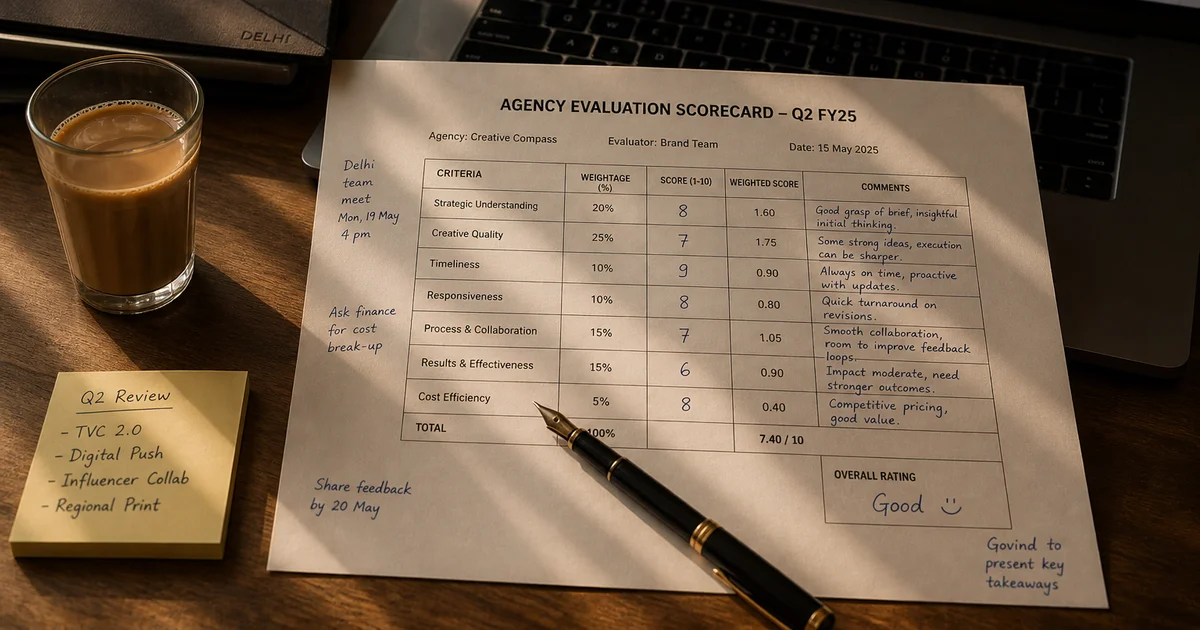
Agency selection is the structural decision that shapes everything that follows. In India, the specific questions are commercial transparency under an active competition investigation and measurement fluency in a market whose television currency is being reformed. Getting both right requires a structured process: a clear brief, objective scoring criteria and negotiated contractual protections around rebates and audit rights. All of that needs to happen before appointment, not after. For the full selection process, see How do you select and manage a media agency in India?
Frequently asked questions
Who measures TV audiences in India? BARC India is the sole television audience currency, jointly governed by broadcasters, advertisers and agencies with a panel of more than 70,000 metered homes. In July 2026 the government froze publication of all ratings pending BARC’s re-registration under the Television Ratings Policy 2026. At the time of writing the freeze had not been lifted, leaving buyers to trade on historical data.
Who are the biggest advertising platforms and properties in India? JioStar is the dominant commercial broadcaster following the Reliance-Disney joint venture completed in November 2024, and holds IPL rights through 2027. YouTube and Meta’s platforms dominate digital reach. The IPL is the single largest advertising property in the market; JioStar reported more than a billion viewers across TV and digital for the 2025 season (company figures).
What advertising rules should I know before planning a campaign in India? Key restrictions include: a ban on alcohol advertising on television and on surrogate advertising under the CCPA’s 2022 guidelines; a prohibition on advertising real-money gaming effective 1 May 2026; influencer disclosure obligations with penalties up to fifty lakh rupees for repeat offences; AI-generated creative labelling rules in force since February 2026; and phasing Digital Personal Data Protection Act obligations covering children’s targeting. Local legal verification is required before any campaign goes live.
Why does media buying transparency matter in India? India’s buying market has long operated on volume rebates and non-disclosed deals. Since March 2025 the Competition Commission of India has been investigating alleged cartelisation among major buying agencies, with dentsu India a self-declared leniency applicant. No findings have been issued. This active investigation is the reason audit rights and explicit rebate disclosure must be written into agency contracts before buying begins.
Agree the measurement yardstick and its dates before the plan is approved. Know what sits behind your agency’s pricing. Verify rather than trust. Vendor-MGT works with advertisers in India on agency selection, media audits and ongoing vendor management, independently, on the advertiser’s side. To discuss how we can support your activity in this market, visit vendor-mgt.com.