 Hong Kong
In this article
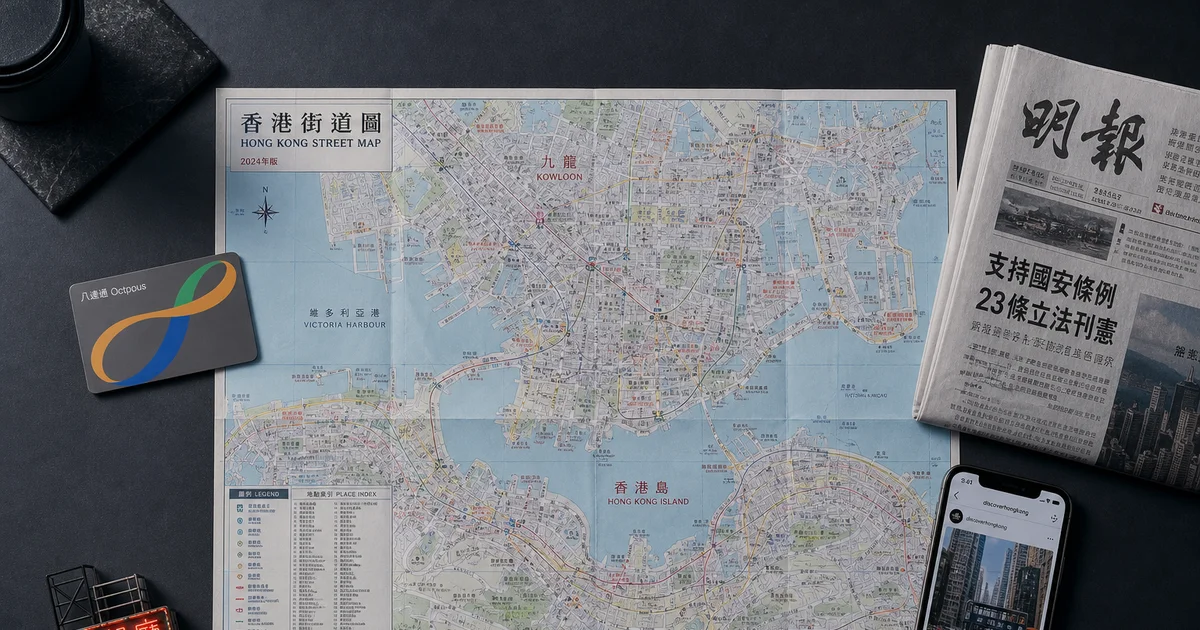
Advertising in Hong Kong presents a deceptively familiar entry point for international advertisers. The global platforms operate freely, English is a working language of business, and every major agency network maintains a presence. But the structural complexity runs beneath the surface: ad-spend data is reported at rate-card prices while negotiated discounts run deep, audited circulation has largely lapsed, the television currency recently changed technology, and the regulatory framework governing broadcast advertising is under formal review.
At a glance: where to start
| Your situation | Where to start |
|---|---|
| Building awareness through broadcast | Television |
| Reaching the connected majority | Digital, social and influencer |
| Targeting professional or affluent readers | |
| Commuter and urban ambient coverage | Out-of-home |
| Brand presence in audio | Radio and audio |
| Appointing or reviewing a media agency | Agency selection and management |
Market context
Hong Kong had 7.16 million internet users in late 2025, equal to 96.8 percent of the population (DataReportal, Digital 2026 Hong Kong, data as of October 2025). Online media takes more than half of tracked ad spend, with social media the largest single category in recent quarters according to admanGo monitoring.
One structural fact shapes every conversation about this market: admanGo and comparable tracking services log monitored insertions and value them at published rate cards. Those gross figures substantially overstate what advertisers actually pay. Negotiated discounts in Hong Kong are deep. Treat adex data as directional, not as market revenue. This gross-versus-net gap is a recurring theme in any audit of Hong Kong activity and a natural starting point for any benchmarking exercise.
Hong Kong operates as a separate advertising market from mainland China, with its own regulator, measurement currency and platform landscape. The mainland is covered in the article on advertising in China. For context on adjacent markets in the region, advertising in Japan and advertising in South Korea each have their own structural particularities, and advertising in Taiwan is covered separately in this series.
Television
Three commercial free-TV broadcasters serve the Hong Kong market: TVB (long the dominant operator, broadcasting Jade in Cantonese and Pearl in English), ViuTV (operated by HK Television Entertainment, part of PCCW, launched 2016), and HOY TV (operated by the i-CABLE group). RTHK, the public broadcaster, carries no commercial advertising. In October 2026 the government renewed all three free-TV licences for twelve years. Advertising time is capped at ten minutes per clock hour between 17:00 and 23:00; outside those hours advertising may not exceed 18 percent of broadcast time. Product placement has been permitted since July 2018 under specific conditions. The Communications Authority is reviewing the television codes with the aim of relaxing advertising controls, with a public consultation expected before the end of 2026 and amended codes targeted for mid-2027. Plans spanning that period should note which rules apply at each stage.
Television measurement
The market’s TV currency, HKTAM, is run by CSM Media Research. In May 2025 the Founding Subscribers Committee, comprising the three commercial broadcasters and the HK4As, awarded CSM a new six-year contract running to 2031, introducing new PeopleMeter and content-recognition technology. A currency that has just changed technology raises an immediate question: how are trend lines before and after the transition made comparable?
Digital, social and influencer
Google, Facebook, Instagram, YouTube and WhatsApp all operate freely in Hong Kong, without the platform restrictions that apply on the mainland. Facebook and WhatsApp are among the most widely used platforms; YouTube has the widest potential advertising reach. WeChat and Xiaohongshu are widely used and matter for reaching mainland-connected audiences and visitors.
There is no independent cross-platform digital currency. Reporting is largely platform-reported, which makes the distinction between platform-reported, third-party-measured and modelled figures a question to settle per campaign.
Major paid dailies include Oriental Daily, Ming Pao, Sing Tao Daily and the South China Morning Post, the English-language title owned by Alibaba Group since 2016. Free dailies Headline Daily and am730, and the digital-native outlet HK01, complete the active market. Audited circulation data is scarce. Publishers’ claimed figures are not independently verified in any widely used currency, so print audience claims need a stated source and date before they enter a plan.
Radio and audio
Commercial Radio Hong Kong and Metro Broadcast are the two commercial operators in this market; RTHK radio carries no advertising. Audio remains a commuter-driven medium in a densely networked city.
Out-of-home
JCDecaux Transport holds the exclusive advertising concession for the MTR network and Airport Express, renewed in January 2024 through the end of 2028. Bus bodies, tram bodies, large digital screens and harbourfront billboards constitute the other main formats in one of the world’s densest out-of-home environments. There is no independent OOH audience currency: measurement is media-owner-led. In December 2025 JCDecaux launched an AI-based audience measurement for MTR advertising, validated by Ipsos, but this remains proprietary rather than an industry standard.
Regulation and category rules
Broadcasting is regulated by the Communications Authority under the Broadcasting Ordinance, with a Generic Code of Practice on Television Advertising Standards (current edition December 2023, under review). Tobacco advertising is comprehensively banned, including online. The Undesirable Medical Advertisements Ordinance restricts health and treatment claims for specified conditions. The Trade Descriptions Ordinance prohibits false trade descriptions and unfair trade practices, enforced by the Customs and Excise Department. Financial promotions for investment products require Securities and Futures Commission authorisation unless an exemption applies. Alcohol advertising is permitted with restrictions on placement around children’s content. The Personal Data (Privacy) Ordinance’s direct-marketing provisions, in force since April 2013, require informed consent before personal data is used for direct marketing, with criminal penalties for breaches. This article provides orientation, not legal advice. Rules change, and local legal verification is required before any campaign goes live.
Assessing a media plan in Hong Kong
Six questions worth pressing on when evaluating any plan for this market. Are costs being judged against rate-card adex or against negotiated net prices, and what benchmark supports the discount level? How are TV trend lines handled across the 2025 HKTAM technology change? Are digital figures platform-reported, third-party-measured or modelled? Do print claims carry a stated source and date, given the absence of audited circulation? Are OOH delivery claims operator-reported or independently verified? Are SFC authorisation and PDPO direct-marketing consent confirmed where they apply?
Agency selection and management
Selecting a media agency is the structural decision that shapes everything else in this market. In Hong Kong, the specific question is net-price discipline: what discount levels a candidate agency actually achieves against rate card, and what audit and benchmarking rights the contract secures. Vendor-MGT recommends planning ten to sixteen weeks from the decision to contract signature, with a further four to eight weeks for transition. How to select and manage a media agency in Hong Kong covers the full process, from brief to appointment to ongoing management.
Frequently asked questions
Who are the biggest advertising platforms and channels in Hong Kong? Online media accounts for more than half of tracked ad spend in Hong Kong, with social media the largest single category. Facebook, Instagram, YouTube and WhatsApp are the dominant platforms. In broadcast, TVB remains the longest-established commercial television operator, alongside ViuTV and HOY TV. JCDecaux Transport holds the major OOH concession covering the MTR network.
Who measures TV audiences in Hong Kong? HKTAM, the market’s television audience measurement currency, is run by CSM Media Research under a contract awarded in May 2025 and running to 2031. The new contract introduced updated PeopleMeter and content-recognition technology, which means historical trend lines before and after the technology change require careful handling in any planning or evaluation exercise.
What advertising rules should I know before planning in Hong Kong? Key rules include a comprehensive ban on tobacco advertising (including online), SFC authorisation requirements for investment product promotions, restrictions on health and treatment claims under the Undesirable Medical Advertisements Ordinance, and PDPO direct-marketing consent obligations in force since April 2013. Broadcasting is regulated by the Communications Authority, whose TV advertising code is currently under formal review. Local legal verification is required before any campaign goes live.
Why do gross ad-spend figures overstate real prices in Hong Kong? Ad-spend tracking in Hong Kong, led by admanGo, logs monitored insertions and values them at published rate cards. Because negotiated discounts in this market are deep, the resulting gross figures substantially overstate what advertisers actually pay. This gross-versus-net gap makes adex data useful for directional share analysis but unreliable as a proxy for actual market prices or for benchmarking what an advertiser should be paying.
Where to go from here
The starting principle for any activity in this market is consistent: agree the measurement yardstick before the plan is approved, establish what the rate card says alongside what is actually being paid, and verify rather than trust. Vendor-MGT works with advertisers in Hong Kong on agency selection, media audits and ongoing vendor management, independently and on the advertiser’s side. For an overview of how this work is structured across markets, visit vendor-mgt.com.