
In this article
- Who this cluster is for
- The rectangle no plan reaches
- Gross and net: the distinction that makes this measurable
- Two approaches to effective frequency
- This is not about spending less
- Rating points and what they represent
- Planning for reach versus planning for savings
- The upper tail and where it hides
- What a view counts across six channels
- Assessing what the budget delivered in practice
- Frequency or recency as the primary lens
- Frequently asked questions
Media measurement is the discipline of establishing what a media budget actually delivers in working reach, not what it costs, and not what it books in gross volume. A plan can meet every agreed delivery figure and still leave its objective unmet, because gross volume and net reach are not the same thing. The gap between the two is where mileage lives: the difference between contacts counted and people genuinely reached, at the frequency the strategy requires.
You may already be asking whether your budget is working as hard as it could. That is the right question.
But the more useful version is not what the media costs but what it delivers, and whether the two tails of the frequency distribution are consuming spend that could have built reach instead.
Who this cluster is for
The articles below are written for CMOs, media directors, and procurement leads who want to understand what their budget is actually delivering before they renegotiate, cut, or reallocate it. Use the table below to find where to start.
| Your situation | Start here |
|---|---|
| You want to understand why the same spend can produce different reach | What is a gross rating point, and why do the same GRPs deliver different effective reach? |
| You are being asked to cut the budget rather than improve the plan | Why is saving money the wrong goal for your media budget? |
| You suspect you are reaching some people far too often | Where does effective frequency hide campaign waste? |
| You need to understand what the delivery numbers actually count | Is a view a view? Six media, six ways of counting |
| You want to know how mileage is assessed in practice | How much mileage does your media budget deliver? |
| You are deciding whether to optimise for frequency or recency | Frequency or recency: which should your auditor measure? |
The rectangle no plan reaches
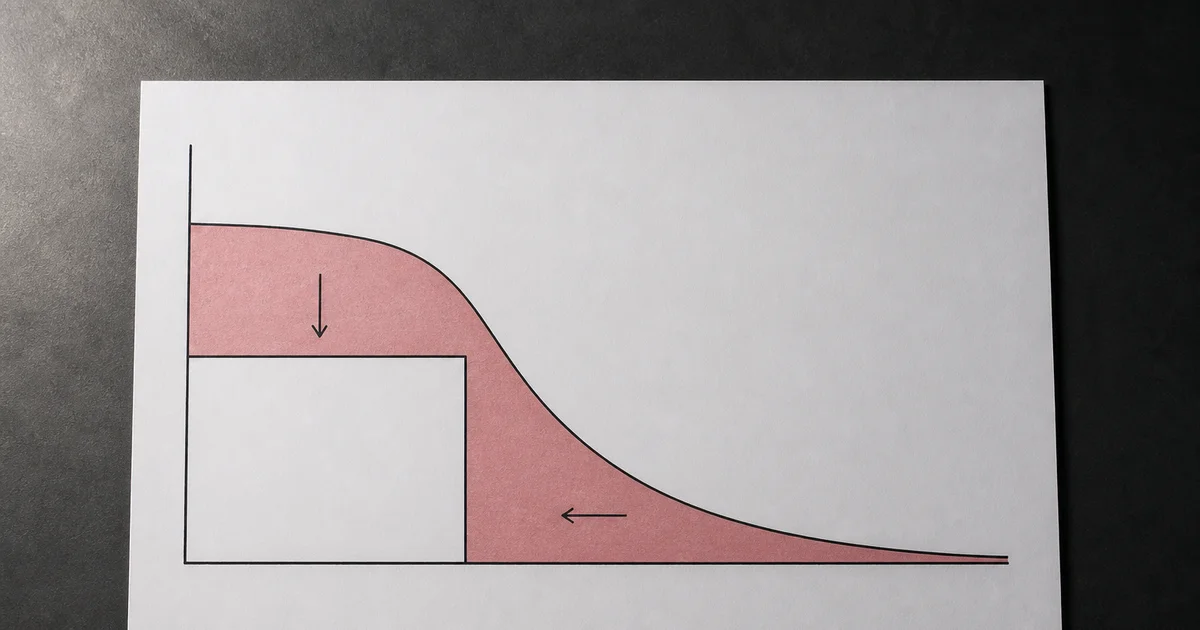
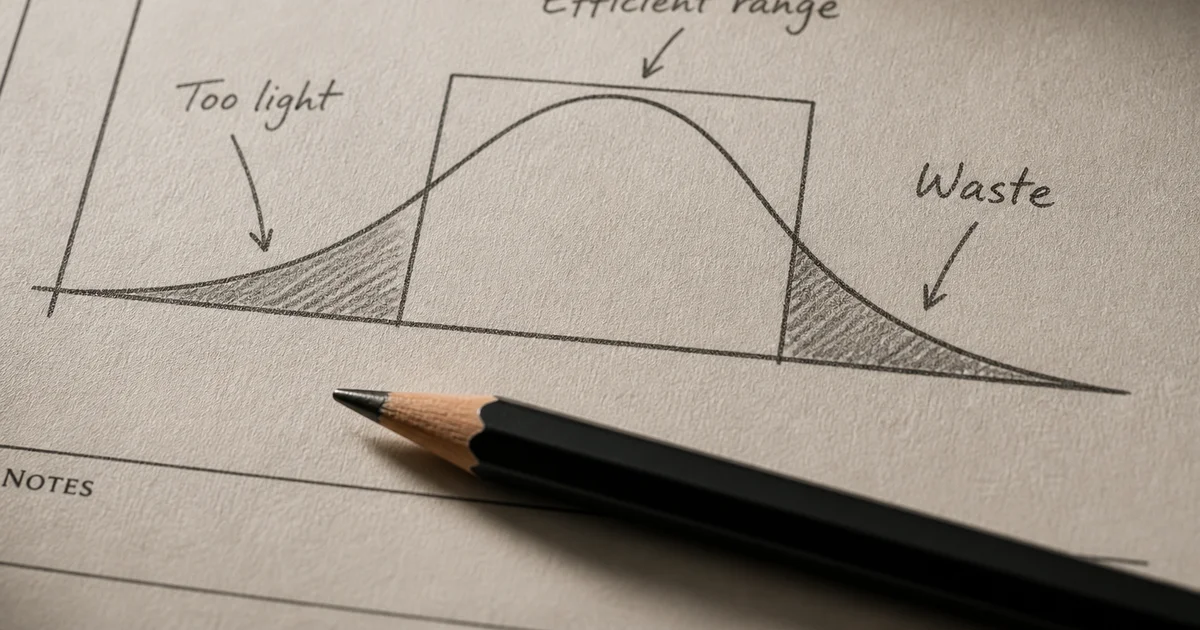
Start with a clear objective: reaching half the target audience at least three times, for instance. That objective immediately defines two kinds of waste, both paid for at full price. Everyone who saw the campaign once or twice did not reach the threshold the strategy set. Everyone who saw it seven or ten times exceeded it without adding anything the objective asked for.
The ideal distribution would be a rectangle: everyone who sees it once also sees it twice and three times, and nobody sees it more. Reality is never a rectangle. The job of a media measurement framework is to show how far the actual distribution sits from that shape, and what it cost to be there.
Gross and net: the distinction that makes this measurable
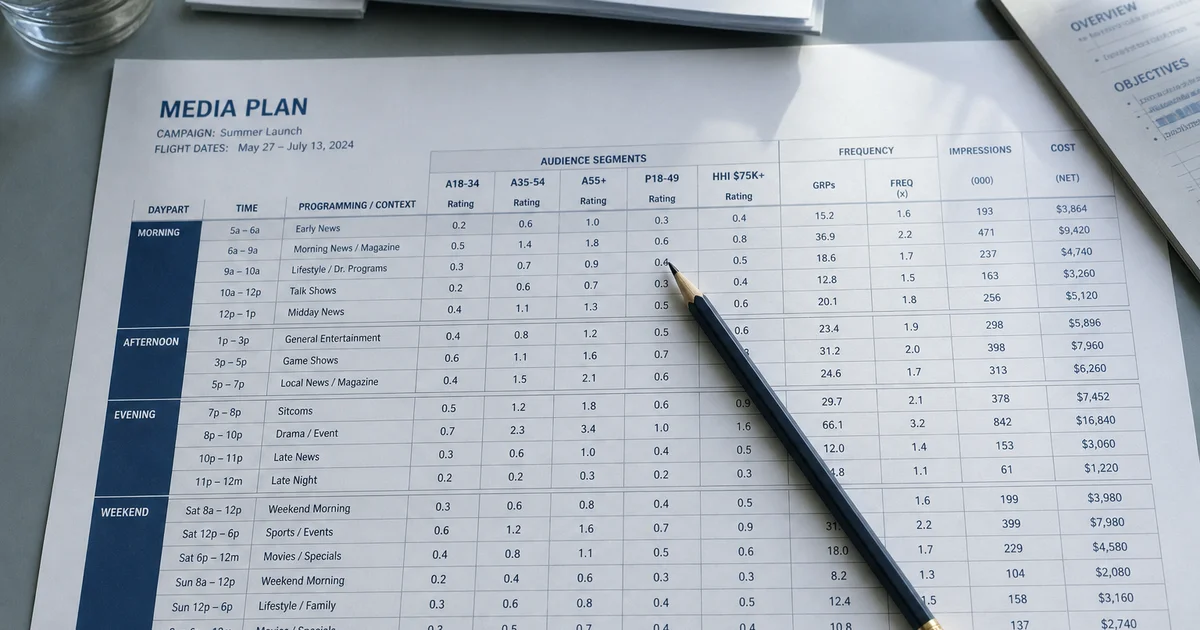
A rating point is gross. It counts contacts, including repeated contacts with the same people. Net reach counts people. That is why a plan can deliver exactly the volume it promised in gross terms and still leave its objective unmet.
Consider two ways of buying one hundred rating points. The first: a thousand spots, each scoring a tenth of a point. The second: ten spots, each scoring ten. The first stacks small, heavily overlapping audiences, the same viewers, again and again. The second reaches a large audience each time.
Identical gross volume, probably a very different budget, and almost certainly a very different net reach. The frequency distribution in particular shows the difference. An aggregate delivery figure hides it completely.
Television can (depending on the deal) be optimised at the level of individual breaks around specific programmes, not just at channel level. Viewers choose programmes. Which programmes a plan touches, and how much the audiences of those programmes overlap, determines how much unique reach gets built. A cheap break can be an expensive purchase if the reach it adds was already there.
The same logic applies to digital, but the measurement does not. Television has one measured currency across all channels; each digital platform counts its own delivery in its own terms. Where a single measurement party covers several platforms, a genuine consolidated picture is possible for that portion of the mix. Beyond it, a consolidated figure is modelled rather than measured, and that distinction should be stated rather than assumed.
Two approaches to effective frequency
There is no single agreed standard for how many contacts are needed. One approach holds that a message must land a certain number of times within a period before it registers, which favours concentrated bursts. The other holds that what matters is being present when the purchase decision happens, which favours continuous light coverage.
Both are serious positions. Which fits depends on the category, brand awareness, the message, and the buying cycle. What they agree on is the point that matters here: waste sits at both ends of the frequency distribution. And the tails do not line up across channels, so optimising one in isolation can worsen the whole picture. Definitions must hold across channels before anything can be added up.
This is not about spending less
The budget stays the same. What is released from the tails goes back into reach that works.
How close a plan can get to the rectangle cannot be stated in general terms. It depends on the objective, on the available programming or inventory, and on what the market allows. It can only be judged against experience of what comparable plans achieve in that media landscape.
The yardstick is set per advertiser, agreed before anything is measured. An assessment against a standard the advertiser did not agree to is an opinion, not an assessment.
Rating points and what they represent
A budget that is neutral in cost is rarely neutral in what it delivers. The same spend, allocated differently across the same channels, can produce substantially different net reach, because of which programmes are bought, how the audiences of those programmes overlap, and how the impressions stack against the same individuals. Understanding why requires a clear view of what a gross rating point actually represents and how it relates to the unique reach a plan builds. Why is budget-neutral not GRP-neutral? works through the mechanics.
Planning for reach versus planning for savings
When a budget comes under pressure, the first instinct is often to find a way to spend less. That is not the same as getting more from what is spent. A plan built around price concessions and the same placements as before can spend less and deliver less. The question the plan should answer is whether the budget is being converted into the reach the strategy needs. Why is saving money the wrong goal for your media budget? examines the difference.
The upper tail and where it hides
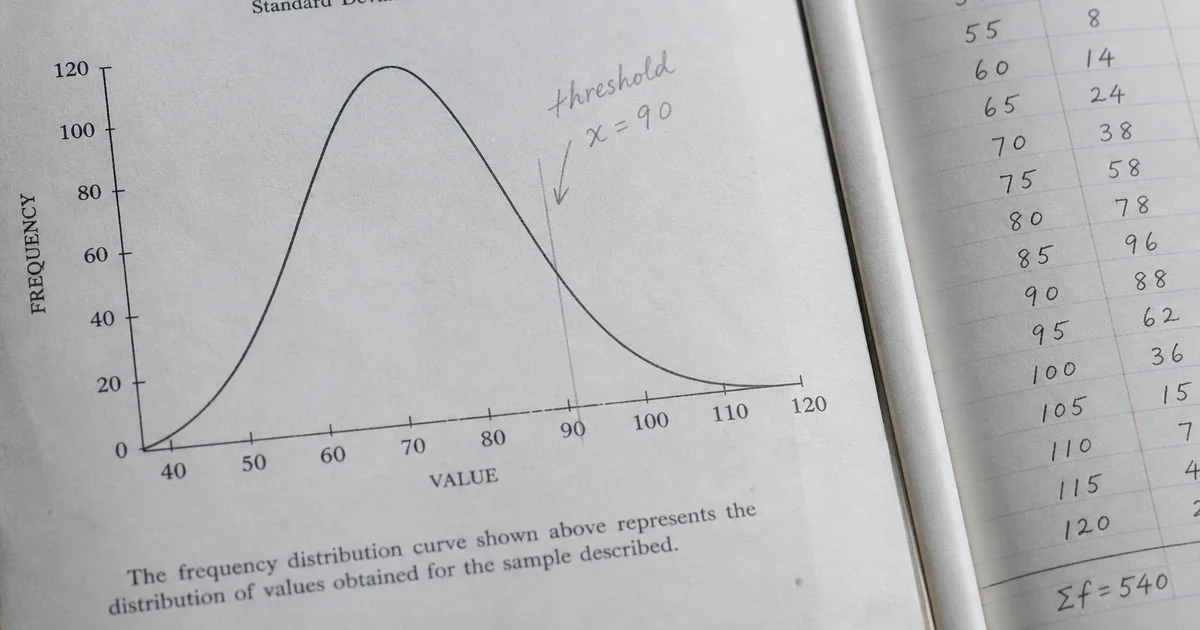
The upper end of the frequency distribution is where a significant share of spend often goes unexamined. Contacts accumulate beyond any useful threshold, and the individuals receiving them have already been reached as many times as the objective required. Where is that threshold, and how quickly does delivery cross it? Where does effective frequency hide campaign waste? addresses the upper tail and why blunt instruments often fail to contain it.
What a view counts across six channels
The word “impression” does not mean the same thing across television, digital video, audio, out-of-home, display, and print. Each channel defines delivery in its own terms, and those definitions affect what the numbers represent when they are added together. Before any cross-channel picture can be interpreted, those definitions need to be explicit. Is a view a view? Six media, six ways of counting sets out the differences across channels.
Assessing what the budget delivered in practice
Knowing what mileage means is one thing. Establishing what a specific plan delivered, against an agreed objective, is another. The assessment requires agreed definitions, a clear audience, a defined period, and a frequency threshold set before the work begins. How much mileage does your media budget deliver? describes how the question is answered in practice.
Frequency or recency as the primary lens
Optimising a plan for concentrated exposure and optimising it for continuous presence produce different distributions. Both can be defensible; neither is always right. An auditor measuring the wrong dimension against the wrong objective will reach conclusions that do not reflect the strategy the plan was meant to serve. Frequency or recency: which should your auditor measure? works through the implications of each approach.
Frequently asked questions
What is media mileage? Media mileage is what a budget delivers in working reach, measured against a frequency objective agreed in advance. It is not a measure of what media costs, but of how efficiently spend is converted into contacts with the right people at the right frequency, and how much of that spend is absorbed by the two tails of the distribution instead.
How can the same budget deliver more?
By reducing the spend absorbed at both ends of the frequency distribution. Under a frequency objective, everyone reached fewer times than the strategy requires represents waste at the lower tail. Everyone reached more times than the objective asks for is waste at the upper tail. Redistributing that spend toward the effective range, where contacts do the work the objective set, is what mileage optimisation means in practice.
Is improving mileage about spending less? No. The budget stays the same. The goal is to convert more of it into reach that meets the frequency threshold the strategy set, rather than contacts that either fall short of it or exceed it. Cost reduction is a separate question, and conflating the two tends to produce plans that are cheaper and less effective.
Who decides what counts as working reach? The advertiser, before anything is measured. What threshold defines working reach, against which audience, over which period, and at what frequency, these are agreed in advance between the advertiser and the assessing party. An assessment against a standard that was not agreed beforehand is an opinion. When those terms are set in writing, the assessment can equally confirm that an agency delivered better than it committed to. Trust is good; verifying is better, and it is better for both sides.
The most useful starting point is usually an agreed definition of what the plan was meant to achieve, followed by a clear-eyed look at what the frequency distribution shows. Vendor-MGT works with advertisers on exactly that basis: the yardstick is yours, agreed before the work begins, and the findings go where the evidence points. Learn more about how we support media audit and vendor management.