In this article
Frequency capping, setting a ceiling on how many times a given user is served the same advertising within a period, is the instrument the market reaches for when upper-tail waste is suspected. It is better than no control at all. It is also not enough on its own, and understanding why clarifies what to ask for instead.
Campaign reports rarely show the problem clearly. Delivery figures look healthy. The volume was bought, the campaign ran, the average frequency sits inside a range that seems reasonable. What the aggregate does not reveal is that a portion of the audience was reached far past the point where additional contact advances the objective. Every one of those contacts was paid for at full price.
What effective frequency actually measures
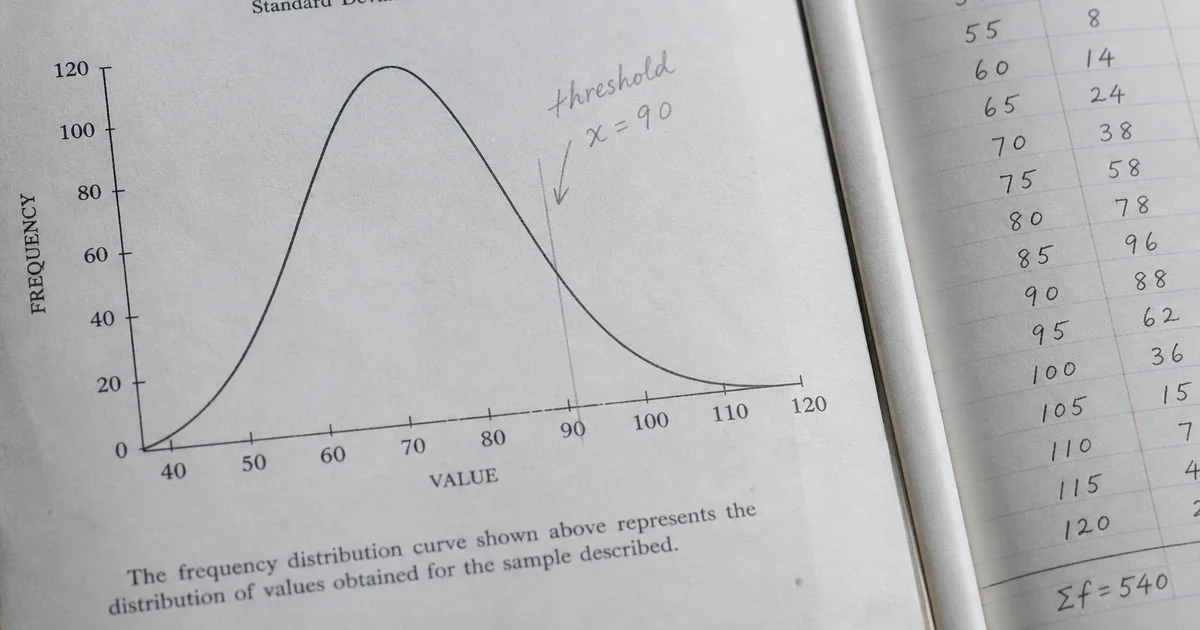
Every campaign rests on a planning assumption: reaching a defined share of the audience at a defined minimum number of contacts will do the work the objective asks for. That threshold, the minimum number of contacts before the advertising functions as intended, is what effective frequency means in practice.
Once a person has been reached at that frequency, further contact with the same person does not advance the objective. It may do other things, and in some cases it does, but it is not what the plan was bought to achieve. The audience sitting well above that threshold represents spend that contributed nothing the strategy required. And in a distribution with a long upper tail, that group is rarely small.
That long tail is usually the result of optimising for a different variable, most often cost per contact, applied to inventory whose audiences overlap heavily. Heavy consumers of the media the plan uses end up accumulating far more contacts than the threshold required, not because anyone intended it, but because nobody looked at the distribution and nobody asked.
Why frequency capping is a blunt instrument
Capping removes the most extreme cases, and that is genuine value. But it addresses the upper tail imprecisely, for reasons that matter in practice.
First, the cap sits at the wrong level. It is applied per platform or per campaign line, while accumulation happens across them.
Three platforms each capped at four contacts allow up to twelve contacts for the same person.
Every cap was respected, and the threshold was still exceeded by a wide margin. The constraint is technically correct and practically insufficient.
Second, a cap is a ceiling, not a distribution. It says nothing about the people below the threshold. The lower tail, everyone who saw the advertising once or twice and never reached the level the strategy required, is untouched by capping entirely. Capping addresses one side of the problem and leaves the other side exactly where it was. Both tails represent waste against the objective; only one is touched by the instrument.
Third, it works on identity, not people. A person using two devices, or browsing without being logged in, appears as two separate users to the platform. The cap is respected against an identifier, not against a human being. The delivery is clean in the data; the reality is different.
Fourth, it caps impressions, not contacts. A delivered impression that no one saw still counts against the limit. The ceiling is applied to a unit that is not the thing the advertiser wanted to control.
Fifth, and most often missed: a cap displaces spend rather than saving it. The budget still has to go somewhere. Constrained at the ceiling, it flows toward new users, and the cheapest new users are not necessarily the ones the plan wanted. Reach gets bought outside the target audience, or on inventory that delivers little attention. The money does not leave the upper tail so much as it leaves the campaign’s quality and reappears as lower-value delivery. A cap can therefore make a plan look tidier without making it better.
These limitations are not arguments against frequency capping as a practice. They are arguments for not treating it as a complete answer.
What to look at instead
The shape of the distribution is a planning outcome, not a setting. It is decided by which inventory is bought and how the audiences of that inventory overlap. That decision is made before the campaign runs, and it is easier to steer at the planning stage than to correct mid-flight. Capping is a control on the edges; the distribution is determined at the plan.
For anyone reviewing how their budget is performing, the question to raise with the agency is not “what was the average frequency?” The same average can describe a plan that reached everyone approximately the right number of times and a plan that reached half the audience once and the other half twelve times. An average conceals the shape entirely.
The useful request is for the frequency distribution against the agreed objective, across the whole plan rather than per platform. That view shows both tails simultaneously and makes the objective the yardstick.
In digital, there is an honest constraint on that request. A consolidated distribution across platforms requires person-level data that platform environments do not share outside their own walls, so a single figure across those environments is only measured where one independent measurement party covers several of them. Elsewhere it is modelled. That is a real limitation. The useful response is to know clearly which part of the campaign falls into the measured category and which falls into the modelled category, rather than treating any consolidated figure as exact. The mechanics of how reach and rating points are built and counted are explored further in Why is budget-neutral not GRP-neutral? and in Is a view a view? Six media, six ways of counting.
Whether the threshold should be a frequency at all, rather than continuous presence calibrated to recency, is a separate question addressed in Frequency or recency: which should your auditor measure?
The distribution and the audit
A full picture of media measurement and mileage: more reach from the same budget sits within a broader framework of what the plan was supposed to deliver against what it did. Frequency distribution is one dimension of that check.
The yardstick is agreed in advance and signed by both sides. A review of the distribution can equally show an agency delivering better than it committed to, reaching the agreed threshold across a higher share of the target audience than the plan intended, with less waste at both ends. The instrument is neutral. Trust is good; verifying is better, and that holds for both sides of the relationship.
Frequently asked questions
What is frequency capping? Frequency capping is a limit on how many times a given user is served the same advertising within a defined period. It is applied at the platform or campaign level and is designed to prevent extreme repetition. Because it works against a user identifier rather than a person, and per platform rather than across them, it removes the most visible cases of over-exposure without resolving the underlying distribution.
Does frequency capping stop wasted spend? It reduces the most extreme cases at the upper tail, but it does not solve the broader problem. The cap is applied per platform while accumulation happens across platforms. It leaves the lower tail, people who never reached the effective frequency threshold, entirely untouched. And because the budget still needs to be spent somewhere, capping typically displaces impressions toward cheaper, lower-quality inventory rather than saving the money. The plan can look tidier in reporting while the underlying quality declines.
What is effective frequency? Effective frequency is the minimum number of contacts the strategy decides is needed before the advertising does its work. It is the threshold that makes contacts above and below it measurable: above it, further contact does not advance the objective; below it, the audience was never reached at the level the plan required. Both conditions represent waste against the objective, though they look quite different in delivery data.
What should I ask my agency for? Ask for the frequency distribution against the agreed objective, across the whole plan rather than per platform. Specify whether you want to see the full distribution or the percentage of the target audience that fell within, below, and above the effective frequency range. Also ask which portion of the figure is based on measured data and which is modelled. In digital environments that cross multiple platform walls, the honest answer will involve both, and knowing which is which is more useful than a single blended number presented as exact.