In this article
Most advertisers already receive considerable information from their media agency. The real question is whether that information can be assessed. And the answer depends almost entirely on whether the definitions underneath the figures were agreed in advance. A number reported without a prior agreement on what it measures is not information. It is a figure.
You may recognise the situation: the monthly report arrives, the columns look familiar, and yet something does not add up. You ask a question. The agency answers correctly, within the terms it was using. The figures were not wrong. The definitions were simply different from what you assumed. That gap, between a figure reported in good faith and a figure that can actually be evaluated, is precisely what a fixed reporting regime closes.
The definitions matter more than the figures themselves
Start with digital, because this is where the gap is widest and where credibility is either won or lost.
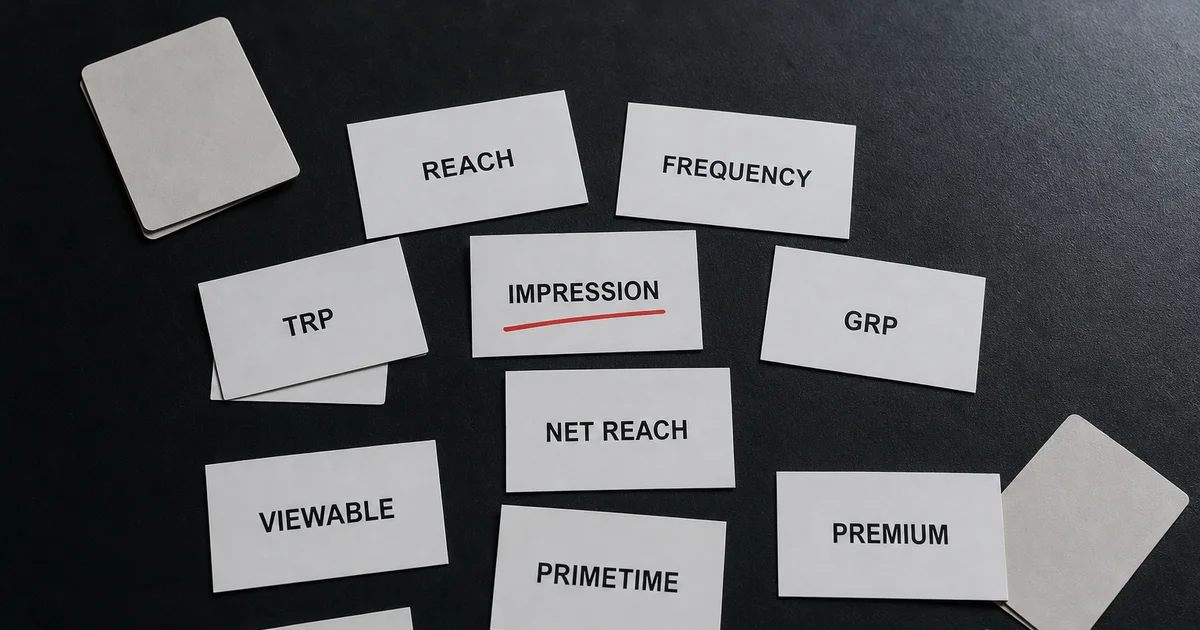
Take viewability. Two agencies can both report viewable impressions and be counting different things, depending on which standard applies and whether measurement is independent or platform-reported. The figure looks the same on both reports. It may not be the same figure.
Take audience reach. Whether it is measured or modelled, and against which population, is rarely stated in a standard report. That omission determines what a reach percentage actually means. A 60% reach against one population definition is a different claim from a 60% reach against another.
The frequency question makes this particularly sharp. Frequency is often reported on platform level while the question is about the audience. Each platform knows its own frequency on its own users. Adding those figures together does not produce a frequency distribution across your audience. It produces a sum of overlapping numbers. Without a prior agreement on how consolidation works, there is a frequency figure on the page that nobody can fully account for. The honest position is often that a consolidated frequency figure is modelled rather than measured, because the walled gardens do not share person-level data. That is almost never stated. It should be.
Classic media confirms this is not a new problem, only a more familiar one. A primetime definition stretched wide enough to absorb the hours before prime, late prime and the early part of night changes the value of everything booked against it, without changing a single line in the plan. Premium positions that were never defined leave room for everything to qualify as premium, or nothing to. Whether third-in-break counts as a premium position is a genuine discussion in the industry. The point is that it should be settled in advance rather than after the fact.
The case that shows what verification is for
The strongest evidence sits at the boundary between both worlds: gross reported where net was meant. I have seen it happen. The difference amounts to roughly 15% of cost, a figure that can be carried into the next negotiation and used. What makes the case instructive is not the gap itself but what it took to surface it. An independent recalculation can settle it.
A genuine mistake like this surfaces because there is a system: the calculation gets done independently. That is precisely what verification is for.
The digital equivalent sits alongside it: what is inside a reported price, technology costs, data costs, agency fee sometimes included and sometimes not, so that two figures which look comparable on paper cover different things entirely. As a rule of thumb, I work based on net net media costs.
Each of these is difficult enough on its own. Together they compound. When the audience definition is loose, the frequency figure is per platform, and the price composition is unstated, the buy can no longer be easily reconstructed. Not because anyone concealed anything, but because there is no fixed point left to work back from.
The overwhelming majority of this is not deliberate. Where no format was agreed, there was also no obligation to report a particular thing, and an agency reporting in good faith reports what it was asked for. That is an absence rather than an act. But an arrangement that cannot be checked has no fixed point to return to when a question arises. Verification is not a comment on the agency. It is what makes the arrangement sound.
And because digital definitions tend to be less settled than those in classic media, fixing in advance what you want reported matters more there, not less.
What a fixed reporting format gives both sides
A fixed information regime settles the definitions before the reporting starts. It standardises the purchase order so that plans and buys form a comparable series rather than separate documents evaluated in isolation. It fixes the moments at which information arrives: the plan is visible before commitment, the buy is reconcilable against the plan, delivery can be checked against both, and the invoice can be laid against all three. It gives the advertiser dashboards they can open without waiting for an interpretation.
Where a reporting structure already exists, it is examined first and completed where it falls short, rather than replaced wholesale. Good procedures exist for consolidating the available digital data as far as it allows. The method itself is less important than the agreement that it will be applied consistently.
For the agency, the format replaces shifting questions with clear expectations. It removes the discussion afterwards about which figures should have been supplied. The first encounter with a new format takes some adjustment - it is fair to say so. But the outcome is fewer questions and surprises on both sides.
This connects to what vendor management as a discipline describes more broadly: an ongoing structure for keeping a commercial relationship performing, not a periodic correction of it. If you are considering what a full performance monitoring programme looks like, what a media performance management programme involves sets that out. And where an agency of record is already in place, what that arrangement covers and what it does not is worth understanding before deciding where the reporting obligations should sit.
The analogy that holds: a buyer of property wants to know whether the glazing is single or double, whether heating is included, whether the property is delivered as a shell. Nobody considers those questions distrustful. Media investments frequently exceed the price of a house, and the same questions are asked far less often. A fixed information format simply asks them in advance, in writing, and answers them in the same way every period.
The advertiser always signs. The format produces a better-informed decision. It does not take the decision.
Good faith is the starting assumption. A check can equally show an agency delivering better than it committed to. Trust is good. Verifying is better, and it is better for both sides.
For organisations looking at how this is structured in practice, learn more on the vendor management approach.
Frequently asked questions
What information should you receive from your media agency? At a minimum: the media plan before commitment, the buy in a form that can be reconciled against the plan, delivery data against both, and the invoice in a form that can be laid against all three. Each of these should arrive in a format agreed in advance, with the definitions settled before reporting starts, not interpreted after the fact.
Why do definitions matter more than the figures themselves? A number without an agreed definition cannot be assessed. A viewability figure means different things depending on the standard applied and who measured it. A frequency figure per platform is not the same as a frequency figure across the audience. When several definitions are loose at once, audience, frequency, price composition, the buy can no longer be reconstructed, not because anyone concealed anything, but because there is no fixed point to work back from.
What is the best media monitoring tool? The most effective approach is not a single tool but a fixed regime: agreed definitions, standardised purchase orders, regular delivery data against the plan, and dashboards the advertiser can access directly. Where a reporting structure already exists, the first step is to examine it and complete what it is missing, rather than replace it. The method matters less than the consistency with which it is applied.
What does media monitoring do in a vendor management context? It creates a structured view of what was planned, what was bought, what was delivered and what was invoiced, in comparable terms across periods. That comparability is what allows a performance conversation rather than a dispute about figures. It also surfaces the kind of discrepancy described above: gross reported where net was meant, or a frequency figure that cannot be reconstructed from the components provided.
Is fixed reporting harder on the agency? It replaces shifting questions with clear expectations, and it removes the discussion afterwards about which figures should have been supplied. The first encounter with a new format takes some adjustment. After that, both sides have a shared reference point, and that is easier for everyone involved.
How much does media monitoring cost? This depends entirely on the scope: the number of markets, channels, campaigns and the depth of reconciliation required. An independent assessment of what is needed is usually the right starting point. No standard figure applies across engagements.