 Vietnam
In this article
- What to test Vietnamese agency candidates on
- TV buying access and measurement transparency
- Digital: White List compliance and platform reporting
- Influencer: 2026 compliance duties
- Category rules and local entity requirements
- What the Vietnamese contract must pin down
- Managing the relationship after appointment
- Running a Vietnam selection, independently
- Frequently asked questions
Selecting a media agency in Vietnam follows the same universal discipline as any rigorous agency selection, but the Vietnamese market places a specific set of tests on candidates that you will not encounter in most other markets. The process itself, including the longlist, shortlist, RFI/RFP, chemistry sessions, scorecard, and contract negotiation, is covered step by step in The media agency selection process, step by step, including the pricing guarantees that belong in any contract. What this guide adds is what you must test Vietnamese candidates on, and what the contract must pin down for this market specifically.
What to test Vietnamese agency candidates on
TV buying access and measurement transparency
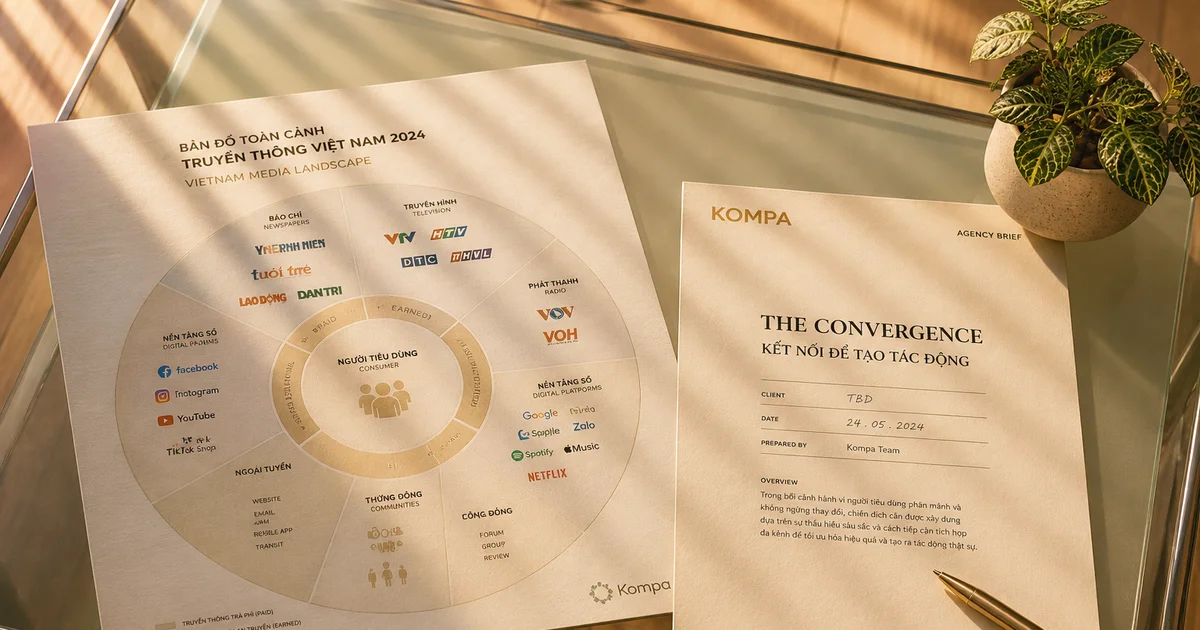
Television remains a dominant channel in Vietnam. Inventory is sold primarily through the sales arms of state broadcasters such as VTV and HTV, and through their authorised representatives. Ask each candidate which measurement system their reporting is based on: the agency people-meter panel operated by Kantar Media Vietnam, the state-administered system, or broadcaster self-published figures. These systems are not reconciled, and the answer shapes how meaningful any post-campaign report will be.
Ask also how the agency buys against state broadcasters’ sales structures in practice. Can they demonstrate direct access, or do they rely on intermediaries?
Digital: White List compliance and platform reporting
Vietnam operates a government-maintained White List of compliant online platforms and a corresponding Black List, administered under the authority of the Ministry of Culture Sports and Tourism. Ask candidates how they guarantee placement on White List inventory and how they document that guarantee per campaign.
Ask which figures in their reporting are platform self-reported rather than independently verified. Be specific about Zalo, the dominant domestic messaging and content platform, and about retail media. Both require dedicated planning capability that not every agency has built.
Influencer: 2026 compliance duties
From 1 January 2026, advertising conveyors in Vietnam operate under tightened legal duties covering verification, use-based endorsement standards, and mandatory disclosure. Ask each candidate how they implement these requirements in practice and, critically, how compliance is documented per campaign. The answer should go beyond policy statements. You want to see a documented workflow that is operational, not aspirational.
Category rules and local entity requirements
Vietnam applies advertising restrictions across several categories. Spirits of fifteen per cent alcohol and above cannot be advertised at all, and beer cannot be advertised on television between 18:00 and 21:00 or around children’s programming. Prescription medicines cannot be advertised, and pre-approval still applies to functional foods and supplements, medical services, and children’s nutrition products.
Ask candidates for their track record on pre-approval categories. Ask specifically about the Vietnamese-language requirements and local-entity obligations that apply to foreign advertisers. A candidate who cannot give precise answers here represents a compliance risk.
What the Vietnamese contract must pin down
The pricing guarantees that belong in any agency contract are covered in The media agency selection process, step by step. Below are the Vietnam-specific applications.
Measurement currency per channel, explicitly named. Because Vietnam’s TV measurement systems are not reconciled, the contract must state which system governs reporting and delivery, and must distinguish measured figures from modelled estimates. Ambiguity here is a governance problem, not a technicality.
Net pricing, rebate treatment, and audit rights. State clearly how volume rebates, agency bonuses, and other non-transparent income are treated. Enforceable audit rights are not a sign of distrust; they are what makes the relationship sustainable. Tax responsibility also requires explicit allocation: buying through unregistered foreign digital suppliers creates withholding tax obligations that fall on the advertiser if the contract is silent on the point.
Compliance responsibility, allocated explicitly. The contract should name the party responsible for category pre-approvals, White List conformity per campaign, and adherence to the 2026 influencer advertising duties. A general reference to “applicable law” is not sufficient.
Managing the relationship after appointment
Appointment is the beginning of the commercial relationship, not its conclusion. The performance yardstick, covering channel-by-channel measurement currency, delivery benchmarks, and compliance reporting cadence, should be agreed and signed by both sides before the first campaign goes live.
A periodic review against that yardstick protects the advertiser if commitments slip. But it equally recognises outperformance when the agency delivers beyond its obligations. Trust is good. Verifying is better, and a well-structured review process serves both sides.
If your review raises questions about value or delivery, consider whether a formal media audit is warranted. An independent audit examines what was actually bought against what was planned and invoiced, and provides an objective basis for the conversation that follows. For the broader discipline of keeping the agency relationship on track after appointment, vendor management: keeping the promise after the pitch covers the ongoing governance framework.
Running a Vietnam selection, independently
Vendor-MGT runs agency selections and pitches for advertisers, independently, paid by the advertiser, on the advertiser’s side, including in Vietnam. If your selection spans Vietnam and several other markets in the region, that is a structurally different exercise from a single-country review.
Get in touch to discuss how we approach multi-market assignments, or read further in our overview of advertising in Vietnam: the media landscape and across other markets in Southeast Asia for broader regional context.
Frequently asked questions
What should a media agency contract in Vietnam cover? The contract should name the measurement currency explicitly per channel, distinguishing measured from modelled figures, because Vietnam’s TV measurement systems are not reconciled. It should set out net pricing with rebate treatment, enforceable audit rights, and explicit responsibility for cross-border platform taxes. Compliance duties, category pre-approvals, White List conformity, and the 2026 influencer advertising requirements, should be allocated by name, not left to a general reference to applicable law.
What should I test Vietnamese agency candidates on during a pitch? Test four areas: first, which TV measurement system their reporting uses and how they access state broadcasters’ sales structures; second, how they guarantee and document White List placement and how they plan for Zalo and retail media; third, how they implement and document the influencer compliance duties in force from 1 January 2026; and fourth, their track record on category pre-approvals, alcohol advertising rules, and the Vietnamese-language and local-entity requirements for foreign advertisers.
Should I use a local Vietnamese agency or an international network? There is no universal answer. What matters is demonstrable buying access to state broadcasters’ sales structures, genuine Zalo and retail media planning capability, and a documented compliance track record under Vietnamese law, including the 2026 influencer rules. The selection process is designed to test exactly those capabilities, regardless of whether the agency is a local independent or part of an international network.